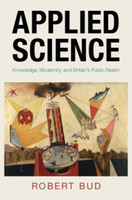
For almost two centuries, the category of 'applied science' was widely taken to be both real and important. Then, its use faded. How could an entire category of science appear and disappear? By taking a longue durée approach to British attitudes across the nineteenth and twentieth centuries, Robert Bud explores the scientific and cultural trends that led to such a dramatic rise and fall. He traces the prospects and consequences that gave the term meaning, from its origins to its heyday as an elixir to cure many of the economic, cultural, and political ills of the UK, eventually overtaken by its competitor, 'technology'. Bud examines how 'applied science' was shaped by educational and research institutions, sociotechnical imaginaries, and political ideologies and explores the extent to which non-scientific lay opinion, mediated by politicians and newspapers, could become a driver in the classification of science.
This book offers practical guidelines on creating value from the application of data science based on selected artificial intelligence methods. In Part I, the author introduces a problem-driven...
Materials are the foundation of technology. As such, most universities provide engineering undergraduates with the fundamental concepts of materials science, including crystal structures,...
This collection shows what went wrong in UK economic policy-making in the 1960s and 1970s, what goes better now, and what still goes wrong. The editors explain how recent developments in economic...
Modeling complex biological, chemical, and physical systems, in the context of spatially heterogeneous mediums, is a challenging task for scientists and engineers using traditional methods of ...