The field called Learning Classifier Systems is populated with romantics. Why shouldn't it be possible for computer programs to adapt, learn, and develop while interacting with their environments? In particular, why not systems that, like organic populations, contain competing, perhaps cooperating, entities evolving together? John Holland was one of the earliest scientists with this vision, at a time when so-called artificial intelligence was in its infancy and mainly concerned with preprogrammed systems that didn't learn. that, like organisms, had sensors, took Instead, Holland envisaged systems actions, and had rich self-generated internal structure and processing. In so doing he foresaw and his work prefigured such present day domains as reinforcement learning and embedded agents that are now displacing the older "standard Af' . One focus was what Holland called "classifier systems": sets of competing rule like "classifiers", each a hypothesis as to how best to react to some aspect of the environment--or to another rule. The system embracing such a rule "popu lation" would explore its available actions and responses, rewarding and rating the active rules accordingly. Then "good" classifiers would be selected and re produced, mutated and even crossed, a la Darwin and genetics, steadily and reliably increasing the system's ability to cope.
The field called Learning Classifier Systems is populated with romantics. Why shouldn't it be possible for computer programs to adapt, learn, and develop while interacting with their environments? In particular, why not systems that, like organic populations, contain competing, perhaps cooperating, entities evolving together? John Holland was one of the earliest scientists with this vision, at a time when so-called artificial intelligence was in its infancy and mainly concerned with preprogrammed systems that didn't learn. that, like organisms, had sensors, took Instead, Holland envisaged systems actions, and had rich self-generated internal structure and processing. In so doing he foresaw and his work prefigured such present day domains as reinforcement learning and embedded agents that are now displacing the older "standard Af' . One focus was what Holland called "classifier systems": sets of competing rule like "classifiers", each a hypothesis as to how best to react to some aspect of the environment--or to another rule. The system embracing such a rule "popu lation" would explore its available actions and responses, rewarding and rating the active rules accordingly. Then "good" classifiers would be selected and re produced, mutated and even crossed, a la Darwin and genetics, steadily and reliably increasing the system's ability to cope.
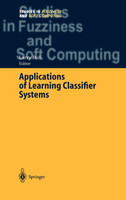
Learning Classifier Systems (LCS) are a machine learning paradigm introduced by John Holland in 1976. They are rule-based systems in which learning is viewed as a process of ongoing adaptation to a...
This volume brings together recent theoretical work in Learning Classifier Systems (LCS), which is a Machine Learning technique combining Genetic Algorithms and Reinforcement Learning. It includes ...
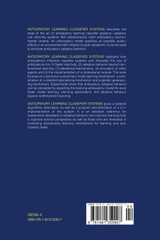
Anticipatory Learning Classifier Systems describes the state of the art of anticipatory learning classifier systems-adaptive rule learning systems that autonomously build ...
This book constitutes the thoroughly refereed post-proceedings of the 4th International Workshop on Learning Classifier Systems, IWLCS 2001, held in San Francisco, CA, USA, in July 2001.The 12...
Background.- A Learning Classifier Systems Model.- A Probabilistic Model for LCS.- Training the Classifiers.- Mixing Independently Trained Classifiers.- The Optimal Set of Classifiers.- An...
Discover your next great read at BookLoop, Australiand online bookstore offering a vast selection of titles across various genres and interests. Whether you're curious about what's trending or searching for graphic novels that captivate, thrilling crime and mystery fiction, or exhilarating action and adventure stories, our curated collections have something for every reader. Delve into imaginative fantasy worlds or explore the realms of science fiction that challenge the boundaries of reality. Fans of contemporary narratives will find compelling stories in our contemporary fiction section. Embark on epic journeys with our fantasy and science fiction titles,
Shop Trending Books and New Releases
Explore our new releases for the most recent additions in romance books, fantasy books, graphic novels, crime and mystery books, science fiction books as well as biographies, cookbooks, self help books, tarot cards, fortunetelling and much more. With titles covering current trends, booktok and bookstagram recommendations, and emerging authors, BookLoop remains your go-to local australian bookstore for buying books online across all book genres.
Shop Best Books By Collection
Stay updated with the literary world by browsing our trending books, featuring the latest bestsellers and critically acclaimed works. Explore titles from popular brands like Minecraft, Pokemon, Star Wars, Bluey, Lonely Planet, ABIA award winners, Peppa Pig, and our specialised collection of ADHD books. At BookLoop, we are committed to providing a diverse and enriching reading experience for all.
Sign In
your cart
Your cart is empty
Menu
Search
PRE-SALES
If you have any questions before making a purchase chat with our online operators to get more information.