the oleic acid on a live and wriggling sister or mother and refrain from evicting her from our hive. But does the occur rence of unintelligent behavior suffice to demonstrate the total absence of mental experience under any circumstances? Ethologists from some distant galaxy could easily discern ex amples of stupid and maladaptive behavior in our own species. But do instances of human stupidity prove that none of us is ever consciously aware of what he is dOing? No available evi dence compels us to believe that insects, or any other animals, experience any sort of consciousness, or intentionally plan any of their behavior. But neither are we compelled to believe the contrary. In areas where data are few and of limited rel evance, dogmatic negativity can easily limit what scientists even try to investigate, and thus perhaps delay or prevent im portant insights and discoveries. Many of the participants agreed that a good starting point would be to consider what we know of our own thinking, subjec tive feelings, and consciousness, and then move on to inquire whether other species experience anything similar. Such an ap proach was once considered fallaciously anthropomorphic. But it seems now to be widely if not universally recognized that this is a serious objection only if one has already assumed in advance that conscious thinking is uniquely human, and the accu sation of anthropomorphism is then merely a reiteration of the prior conviction.
the oleic acid on a live and wriggling sister or mother and refrain from evicting her from our hive. But does the occur rence of unintelligent behavior suffice to demonstrate the total absence of mental experience under any circumstances? Ethologists from some distant galaxy could easily discern ex amples of stupid and maladaptive behavior in our own species. But do instances of human stupidity prove that none of us is ever consciously aware of what he is dOing? No available evi dence compels us to believe that insects, or any other animals, experience any sort of consciousness, or intentionally plan any of their behavior. But neither are we compelled to believe the contrary. In areas where data are few and of limited rel evance, dogmatic negativity can easily limit what scientists even try to investigate, and thus perhaps delay or prevent im portant insights and discoveries. Many of the participants agreed that a good starting point would be to consider what we know of our own thinking, subjec tive feelings, and consciousness, and then move on to inquire whether other species experience anything similar. Such an ap proach was once considered fallaciously anthropomorphic. But it seems now to be widely if not universally recognized that this is a serious objection only if one has already assumed in advance that conscious thinking is uniquely human, and the accu sation of anthropomorphism is then merely a reiteration of the prior conviction.
The power of stories to raise our concern for animals has been postulated throughout history by countless scholars, activists, and writers, including such greats as Thomas Hardy and Leo Tolstoy. This...
"They don't have syntax, so we can eat them." According to Richard Sorabji, this conclusion attributed to the Stoic philosophers was based on Aristotle's argument that animals lack reason. In his...
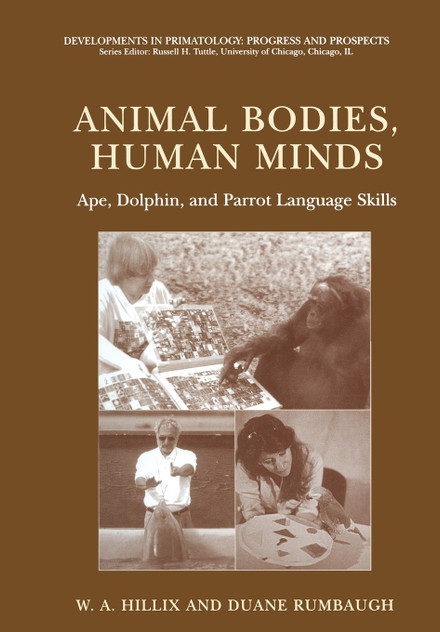
Several books chronicle attempts, most of them during the last 40 years, to teach animals to communicate with people in a human-designed language. These books have typically treated only one or two...
Discover your next great read at BookLoop, Australiand online bookstore offering a vast selection of titles across various genres and interests. Whether you're curious about what's trending or searching for graphic novels that captivate, thrilling crime and mystery fiction, or exhilarating action and adventure stories, our curated collections have something for every reader. Delve into imaginative fantasy worlds or explore the realms of science fiction that challenge the boundaries of reality. Fans of contemporary narratives will find compelling stories in our contemporary fiction section. Embark on epic journeys with our fantasy and science fiction titles,
Shop Trending Books and New Releases
Explore our new releases for the most recent additions in romance books, fantasy books, graphic novels, crime and mystery books, science fiction books as well as biographies, cookbooks, self help books, tarot cards, fortunetelling and much more. With titles covering current trends, booktok and bookstagram recommendations, and emerging authors, BookLoop remains your go-to local australian bookstore for buying books online across all book genres.
Shop Best Books By Collection
Stay updated with the literary world by browsing our trending books, featuring the latest bestsellers and critically acclaimed works. Explore titles from popular brands like Minecraft, Pokemon, Star Wars, Bluey, Lonely Planet, ABIA award winners, Peppa Pig, and our specialised collection of ADHD books. At BookLoop, we are committed to providing a diverse and enriching reading experience for all.
Sign In
your cart
Your cart is empty
Menu
Search
PRE-SALES
If you have any questions before making a purchase chat with our online operators to get more information.