Trending Bestseller

Analysing urban evolution using remote sensing techniques

Elisabeth Regina Alves C. Silva

No reviews yet Write a Review
Paperback / softback
20 August 2024
$53.00
Ships in 3-5 business days
Hurry up! Current stock:
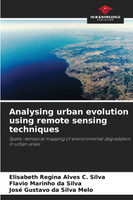
Due to the intense urban growth of cities, green areas and water bodies are increasingly susceptible to environmental degradation. In this sense, there has been growing concern about ways to control and mitigate environmental degradation, which requires prior planning of land use. A survey of current land use, which is necessary for planning purposes, can be obtained using multispectral data provided by remote sensing satellites. The aim of this study was to carry out a spatio-temporal analysis of the Olho D'água Lagoon, the main natural coastal lagoon in the state of Pernambuco, based on products obtained through remote sensing. Two biophysical variables were used in the evaluation: NDVI, to assess the chlorophyll content of the vegetation, and SAVI, to identify areas of degradation in the area. The study showed that vegetation with a high chlorophyll content has decreased considerably due to urban densification in recent decades. The NDVI result was corroborated by the SAVI results, which indicated an increase in degradation in the area.

This product hasn't received any reviews yet. Be the first to review this product!

$53.00
Ships in 3-5 business days
Hurry up! Current stock:

Analysing urban evolution using remote sensing techniques

$53.00

Description

Due to the intense urban growth of cities, green areas and water bodies are increasingly susceptible to environmental degradation. In this sense, there has been growing concern about ways to control and mitigate environmental degradation, which requires prior planning of land use. A survey of current land use, which is necessary for planning purposes, can be obtained using multispectral data provided by remote sensing satellites. The aim of this study was to carry out a spatio-temporal analysis of the Olho D'água Lagoon, the main natural coastal lagoon in the state of Pernambuco, based on products obtained through remote sensing. Two biophysical variables were used in the evaluation: NDVI, to assess the chlorophyll content of the vegetation, and SAVI, to identify areas of degradation in the area. The study showed that vegetation with a high chlorophyll content has decreased considerably due to urban densification in recent decades. The NDVI result was corroborated by the SAVI results, which indicated an increase in degradation in the area.

Customers Also Viewed