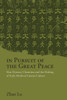
Since Aristotle, the concept of the magnanimous or great-souled man was employed by philosophers of antiquity to describe individuals who attained the highest degree of virtue. Greatness of soul (magnitudo animi or magnanimitas) was part of the language of Classical and Hellenistic virtue theory central to the education of Ambrose and Augustine. Yet as bishops they were conscious of fundamental differences between Christian and pagan visions of virtue. Greatness of soul could not be appropriated whole cloth. Instead, the great-souled man had to be baptized to conform with Christian understandings of righteousness, compassion, and humility. In this book, J. Warren Smith traces the development of the ideal of the great-souled man from Plato and Aristotle to latter adaptions by Cicero, Seneca, and Plutarch. He then examines how Ambrose's and Augustine's theological commitments influenced their different critiques, appropriations, and modifications of the language of magnanimity.
'A final virtue of Leyser's book is its careful awareness of the modern scholarly tradition' -Journal of Theological Studies
'The insights and intelligence of Leyser's discussions provide another...
Why Chase Greatness?ER doctor and ultramarathoner Dr. Russ Reinbolt invites you on a transformative journey that transcends the boundaries of ordinary living in his debut book, In Pursuit of Extreme...
The only children's book dedicated to the life of Saint Ambrose of Milan, this engaging book tells his story from A to Z. Ambrose's life was filled with twists, turns and adventure...
IOWA REMEMBERS HER PATRIOT SONSWHO WENT FORTH AT THE CALL OF DUTYTO HONOR THEIR COUNTRYIN THE DREADFUL CARNAGE OF WARIOWA MONUMENTLOOKOUT MOUNTAINFollow the life of Ambrose Cobb, an Iowa farm boy...