

Trending Bestseller
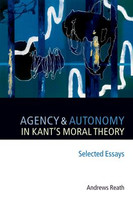
Agency and Autonomy in Kant's Moral Theory
Andrews Reath presents a selection of his best essays on various features of Kant's moral psychology and moral theory, with particular emphasis on his conception of rational agency and his conception of autonomy. Together the essays articulate Reath's original approach to Kant's views about human autonomy, which explains Kant's belief that objective moral requirements are based on principles we choose for ourselves. With two new papers, and revised versions of
several others, the volume will be of great interest to all students and scholars of Kant and of moral philosophy.
Paperback / softback
01-March-2006
RRP:
$107.95
$81.00
Ships in 3-5 business days

Agency and Autonomy in Kant's Moral Theory
RRP:
$107.95
$81.00
Description
Andrews Reath presents a selection of his best essays on various features of Kant's moral psychology and moral theory, with particular emphasis on his conception of rational agency and his conception of autonomy. The opening essays explore different elements of Kant's views about motivation, including his account of respect for morality as the distinctive moral motive and his view of the principle of happiness as a representation of the shared
structure of non-moral choice. These essays stress the unity of Kant's moral psychology by arguing that moral and non-moral considerations motivate in essentially the same way. Several of the essays
develop an original approach to Kant's conception of autonomy that emphasizes the political metaphors found throughout Kant's writings on ethics. They argue that autonomy is best interpreted not as a psychological capacity, but as a kind of sovereignty: in claiming that moral agents have autonomy, Kant regards them as a kind of sovereign legislator with the power to give moral law through their willing. The final essays explore some of the implications of this conception of autonomy elsewhere
in Kant's moral thought, arguing that his Formula of Universal Law uses this conception of autonomy to generate substantive moral principles and exploring the connection between Kantian self-legislation
and duties to oneself. The collection offers revised versions of several previously published essays, as well as two new papers, 'Autonomy of the Will as the Foundation of Morality' and 'Agency and Universal Law'. It will be of interest to all students and scholars of Kant, and to many moral philosophers.
You May Like
