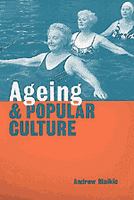

As the 'grey market' perpetuates the quest for eternal youth, the biological realities of deep old age are increasingly denied. Ageing and Popular Culture traces the historical emergence of stereotypes of retirement and documents their recent demise, arguing that although modernisation, marginalisation, and medicalisation created rigid age classifications, the rise of consumer culture has coincided with a postmodern broadening of options for those in the Third Age. With an adroit use of photographs and other visual sources, Andrew Blaikie demonstrates that an expanded leisure phase is breaking down barriers between mid and later life. At the same time, 'positive ageing' also creates new imperatives and new norms with attendant forms of deviance. While babyboomers may anticipate a fulfilling retirement, none relish decline. Has deep old age replaced death as the taboo subject of the late twentieth century? If so, what might be the consequences?
This book is a selection of essays from the author's work since the early 1980s. It is an analysis of political and cultural trends based upon case studies from the North West of England, roughly...
This fascinating study places multiple genres in dialogue and considers both medievalism and genre to be frameworks from which meaning can be produced. It explores works from a wide range of...
How has popular film, television and fiction responded to the realities of an ageing Western population? This volume analyses this field of representation to argue that, while celebrations of ageing...