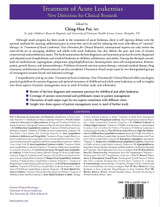
The rates of acute leukemia cure have gradually improved over the last decade. Clinical study results reflect the impact of chemotherapy intensity and duration, the role of prolonged maintenance, intensified consolidation or very early intensification. Further progress has also been achieved in bone marrow trans plantation, and recent prospective studies and meta-analyses have contributed comparisons of the high antileukemic efficacy of bone marrow transplantation to that of improved chemotherapy. This allows a more successful combining of the two forms of treatment. New prognostic factors have emerged from both cytogenetic and molecular genetic research. Thus, the Philadelphia chromosome translocation and the bcr/abl gene rearrangement have proven to be the dominating risk factor in acute lymphoblastic leukemia. Since the frequency increases with age, differences in prognosis between children and adults can be explained. Evaluation of molecular and immunologic leukemia cell markers has provided a better understanding of residual leukemia in clinical remission, as a prognostic factor and in monitoring the effectiveness of the antileukemic strategy. Recent work on leukemic cell biology has resulted in novel therapeutic approaches such as terminal differentiation by all-trans-retinoic acid, modulation of chemotherapy by hematopoietic growth factors such as GM-CSF and enhancement of immunologic control by cytokines such as interleukin 2. New antimicrobial drugs and the application of mostly empiric anti-infectious strategies have helped reducing the therapeutic risk. Thus, a number of recent achievements have provided us with new options in the management of patients with acute leukemias.
The rates of acute leukemia cure have gradually improved over the last decade. Clinical study results reflect the impact of chemotherapy intensity and duration, the role of prolonged maintenance, intensified consolidation or very early intensification. Further progress has also been achieved in bone marrow trans plantation, and recent prospective studies and meta-analyses have contributed comparisons of the high antileukemic efficacy of bone marrow transplantation to that of improved chemotherapy. This allows a more successful combining of the two forms of treatment. New prognostic factors have emerged from both cytogenetic and molecular genetic research. Thus, the Philadelphia chromosome translocation and the bcr/abl gene rearrangement have proven to be the dominating risk factor in acute lymphoblastic leukemia. Since the frequency increases with age, differences in prognosis between children and adults can be explained. Evaluation of molecular and immunologic leukemia cell markers has provided a better understanding of residual leukemia in clinical remission, as a prognostic factor and in monitoring the effectiveness of the antileukemic strategy. Recent work on leukemic cell biology has resulted in novel therapeutic approaches such as terminal differentiation by all-trans-retinoic acid, modulation of chemotherapy by hematopoietic growth factors such as GM-CSF and enhancement of immunologic control by cytokines such as interleukin 2. New antimicrobial drugs and the application of mostly empiric anti-infectious strategies have helped reducing the therapeutic risk. Thus, a number of recent achievements have provided us with new options in the management of patients with acute leukemias.
International experts not only review the state-of-the-art in managing children and adults with acute leukemia, but also debate the pros and cons of current controversial and problematic issues. The...
Over the past 10 years, work on acute promyelocytic leukemia (APL) has become the paradigm of translational research that began with the discovery of a recurrent chromosomal translocation, followed...
Acute myelogenous leukemia (AML), is the most common form of leukemia in adults. AML is a deadly form of malignancy, the prognosis for which has not improved in the last two decades. More...
The 6th volume of the book series Acute Leukemias presents both therapeutic and prognostic updates of the most recent results of major multicenter clinical trials. Additional chapters report on new ...
Discover your next great read at BookLoop, Australiand online bookstore offering a vast selection of titles across various genres and interests. Whether you're curious about what's trending or searching for graphic novels that captivate, thrilling crime and mystery fiction, or exhilarating action and adventure stories, our curated collections have something for every reader. Delve into imaginative fantasy worlds or explore the realms of science fiction that challenge the boundaries of reality. Fans of contemporary narratives will find compelling stories in our contemporary fiction section. Embark on epic journeys with our fantasy and science fiction titles,
Shop Trending Books and New Releases
Explore our new releases for the most recent additions in romance books, fantasy books, graphic novels, crime and mystery books, science fiction books as well as biographies, cookbooks, self help books, tarot cards, fortunetelling and much more. With titles covering current trends, booktok and bookstagram recommendations, and emerging authors, BookLoop remains your go-to local australian bookstore for buying books online across all book genres.
Shop Best Books By Collection
Stay updated with the literary world by browsing our trending books, featuring the latest bestsellers and critically acclaimed works. Explore titles from popular brands like Minecraft, Pokemon, Star Wars, Bluey, Lonely Planet, ABIA award winners, Peppa Pig, and our specialised collection of ADHD books. At BookLoop, we are committed to providing a diverse and enriching reading experience for all.
Sign In
your cart
Your cart is empty
Menu
Search
PRE-SALES
If you have any questions before making a purchase chat with our online operators to get more information.