
Trending Bestseller

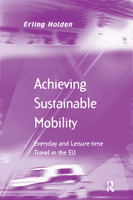
Achieving Sustainable Mobility

No reviews yet Write a Review
Paperback / softback
30 November 2016
264 Pages
RRP: $113.99
$113.00
Hurry up! Current stock:
Sustainable mobility has become the new imperative for transport policy. There have been a number of policy attempts at sustainable mobility globally, such as the development of more efficient conventional transport technologies, the promotion of efficient and affordable public transport systems and the encouragement of environmental awareness. Such policies have so often been presented as prerequisites for sustainable mobility that they are now taken for granted. But are any of these policies really successful? To what extent do they actually contribute (or fail to contribute) to sustainable mobility? Why do some policies succeed and others fail? Using an interdisciplinary approach which brings together various theories and methodologies, this book tests each of these policies - or hypotheses, as the author sees them - with detailed empirical investigations. It also argues that leisure-time travel should be included in any sustainable mobility policies, as it now accounts for 50 per cent of all annual travel distance in developed countries. The book concludes by suggesting fourteen theses of sustainable mobility for the EU and a new model for future best practice.

You Can Find This Book In

    Book Details
    ISBN-13
    9781138254954
    Author
    Erling Holden
    Publisher
    Taylor & Francis
    Published
    30 November 2016
    Format
    Paperback / softback
    Pages
    264

    This product hasn't received any reviews yet. Be the first to review this product!

    RRP: $113.99
    $113.00
    Hurry up! Current stock:

    Achieving Sustainable Mobility

    RRP: $113.99
    $113.00

    Description

    Sustainable mobility has become the new imperative for transport policy. There have been a number of policy attempts at sustainable mobility globally, such as the development of more efficient conventional transport technologies, the promotion of efficient and affordable public transport systems and the encouragement of environmental awareness. Such policies have so often been presented as prerequisites for sustainable mobility that they are now taken for granted. But are any of these policies really successful? To what extent do they actually contribute (or fail to contribute) to sustainable mobility? Why do some policies succeed and others fail? Using an interdisciplinary approach which brings together various theories and methodologies, this book tests each of these policies - or hypotheses, as the author sees them - with detailed empirical investigations. It also argues that leisure-time travel should be included in any sustainable mobility policies, as it now accounts for 50 per cent of all annual travel distance in developed countries. The book concludes by suggesting fourteen theses of sustainable mobility for the EU and a new model for future best practice.

    You Can Find This Book In

      This Book Is Categorised As