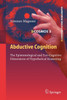
Thisvolumeexploresabductivecognition,animportantbut,atleastuntilthe third quarter of the last century, neglected topic in cognition. It integrates and further develops ideas already introduced in a previous book, which I published in 2001 (Abduction, Reason, and Science. Processes of Discovery and Explanation, Kluwer Academic/Plenum Publishers, New York). Thestatusofabductionisverycontroversial. Whendealingwithabductive reasoning misinterpretations and equivocations are common. What are the di?erences between abduction and induction? What are the di?erences - tween abduction and the well-known hypothetico-deductive method? What did Peircemeanwhen heconsideredabductionboth a kindofinferenceanda kind of instinct or when he considered perception a kind of abduction? Does abduction involve only the generation of hypotheses or their evaluation too? Are the criteria for the best explanation in abductive reasoning epistemic, or pragmatic, or both? Does abduction preserve ignorance or extend truth or both? How many kinds of abduction are there? Is abduction merely a kind of "explanatory" inference or does it involve other non-explanatory ways of guessing hypotheses? The book aims at increasing knowledge about creative and expert inf- ences. The study of these high-level methods of abductive reasoning is s- uated at the crossroads of philosophy, logic, epistemology, arti?cial intel- gence, neuroscience, cognitive psychology, animal cognition and evolutionary theories; that is, at the heart of cognitive science. Philosophers of science in thetwentiethcenturyhavetraditionallydistinguishedbetweentheinferential processesactiveinthelogicofdiscoveryandtheonesactiveinthelogicofj- ti?cation. Most have concluded that no logic of creative processes exists and, moreover,that a rational model of discovery is impossible. In short, scienti?c creative inferences are irrational and there is no "reasoning" to hypotheses.
Thisvolumeexploresabductivecognition,animportantbut,atleastuntilthe third quarter of the last century, neglected topic in cognition. It integrates and further develops ideas already introduced in a previous book, which I published in 2001 (Abduction, Reason, and Science. Processes of Discovery and Explanation, Kluwer Academic/Plenum Publishers, New York). Thestatusofabductionisverycontroversial. Whendealingwithabductive reasoning misinterpretations and equivocations are common. What are the di?erences between abduction and induction? What are the di?erences - tween abduction and the well-known hypothetico-deductive method? What did Peircemeanwhen heconsideredabductionboth a kindofinferenceanda kind of instinct or when he considered perception a kind of abduction? Does abduction involve only the generation of hypotheses or their evaluation too? Are the criteria for the best explanation in abductive reasoning epistemic, or pragmatic, or both? Does abduction preserve ignorance or extend truth or both? How many kinds of abduction are there? Is abduction merely a kind of "explanatory" inference or does it involve other non-explanatory ways of guessing hypotheses? The book aims at increasing knowledge about creative and expert inf- ences. The study of these high-level methods of abductive reasoning is s- uated at the crossroads of philosophy, logic, epistemology, arti?cial intel- gence, neuroscience, cognitive psychology, animal cognition and evolutionary theories; that is, at the heart of cognitive science. Philosophers of science in thetwentiethcenturyhavetraditionallydistinguishedbetweentheinferential processesactiveinthelogicofdiscoveryandtheonesactiveinthelogicofj- ti?cation. Most have concluded that no logic of creative processes exists and, moreover,that a rational model of discovery is impossible. In short, scienti?c creative inferences are irrational and there is no "reasoning" to hypotheses.
This work has been selected by scholars as being culturally important, and is part of the knowledge base of civilization as we know it. This work was reproduced from the original artifact, and...
Discover your next great read at BookLoop, Australiand online bookstore offering a vast selection of titles across various genres and interests. Whether you're curious about what's trending or searching for graphic novels that captivate, thrilling crime and mystery fiction, or exhilarating action and adventure stories, our curated collections have something for every reader. Delve into imaginative fantasy worlds or explore the realms of science fiction that challenge the boundaries of reality. Fans of contemporary narratives will find compelling stories in our contemporary fiction section. Embark on epic journeys with our fantasy and science fiction titles,
Shop Trending Books and New Releases
Explore our new releases for the most recent additions in romance books, fantasy books, graphic novels, crime and mystery books, science fiction books as well as biographies, cookbooks, self help books, tarot cards, fortunetelling and much more. With titles covering current trends, booktok and bookstagram recommendations, and emerging authors, BookLoop remains your go-to local australian bookstore for buying books online across all book genres.
Shop Best Books By Collection
Stay updated with the literary world by browsing our trending books, featuring the latest bestsellers and critically acclaimed works. Explore titles from popular brands like Minecraft, Pokemon, Star Wars, Bluey, Lonely Planet, ABIA award winners, Peppa Pig, and our specialised collection of ADHD books. At BookLoop, we are committed to providing a diverse and enriching reading experience for all.
Sign In
your cart
Your cart is empty
Menu
Search
PRE-SALES
If you have any questions before making a purchase chat with our online operators to get more information.