A Computational Approach to Statistical Arguments in Ecology and Evolution
Scientists need statistics. Increasingly this is accomplished using computational approaches. Freeing readers from the constraints, mysterious formulas and sophisticated mathematics of classical statistics, this book is ideal for researchers who want to take control of their own statistical arguments. It demonstrates how to use spreadsheet macros to calculate the probability distribution predicted for any statistic by any hypothesis. This enables readers to use anything that can be calculated (or observed) from their data as a test statistic and hypothesize any probabilistic mechanism that can generate data sets similar in structure to the one observed. A wide range of natural examples drawn from ecology, evolution, anthropology, palaeontology and related fields give valuable insights into the application of the described techniques, while complete example macros and useful procedures demonstrate the methods in action and provide starting points for readers to use or modify in their own research.
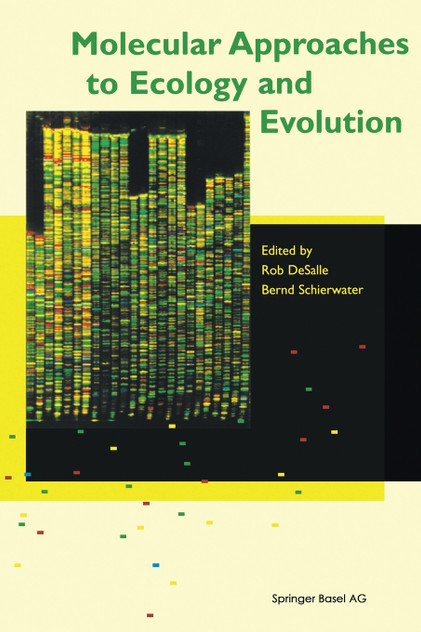
Four years ago we edited a volume of 36 papers entitled Molecular Approaches to Ecology and Evolution (Schierwater et ai. , 1994), in which we attempted to put to gether a diverse array of papers...
The study of ecological systems is often impeded by components that escape perfect observation, such as the trajectories of moving animals or the status of plant seed banks. These hidden components...
The second edition of this book adds eight new contributors to reflect a modern cutting edge approach to genomics. It contains the newest research results on genomic analysis and modeling using ...
In this illuminating volume, Robert P. Abelson delves into the too-often dismissed problems of interpreting quantitative data and then presenting them in the context of a coherent story about one's...