Trending Bestseller

100 Questions and Answers About the Religiously Unaffiliated

Nones, Agnostics, Atheists, Humanists, Freethinkers, Secularists and Skeptics

Michigan State School of Journalism

No reviews yet Write a Review
Paperback / softback
05 March 2024
$37.00
Ships in 5–7 business days
Hurry up! Current stock:

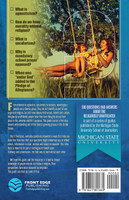
Sometimes generally referred to as "the nones," agnostics, atheists, humanists, freethinkers, secularists and skeptics compose one of the fastest growing faith categories in the United States. Because they are treated as "nones," some people face discrimination as nonbelievers, despite their varied and strong beliefs, values and morals. This basic guide, "100 Questions and Answers About the Religiously Unaffiliated," describes the differences, explains why discrimination and laws force some to hide their beliefs and why they would like to shed the label of "nones." Religious freedom and the First Amendment's establishment clause come up frequently.

The key issue for many is whether the First Amendment's guarantee of religious freedom also guarantees the right to be free from religion.

Legal issues include school prayer, the obligation to support tax-exempt religious properties and requirements that people profess belief in God to be allowed to vote or hold office.

Life magazine called Madalyn Murray O'Hair, whose lawsuit ended mandatory prayer in public schools, "the most hated woman in America." The Secular Coalition for America's website directory withheld the name of its communications consultant because "unwarranted prejudices and discriminatory practices ... affect atheists and humanists. Consequently, s/he felt it was best to be incognito for now, since working for an organization that protects the rights of nontheists might result in lost opportunities with other clients."

In this guide's forward, Dr. Phil Zuckerman writes, "Understanding secular people is important for many reasons. For one thing, secular movements, leaders, values and ideals play significant roles in the political landscapes of the world. From the first sentence of the First Amendment to the U.S. Constitution, to Article 20 of Japan's Constitution, from France's laïcité to Vietnam's atheistic dictatorship, and from the founding of the Mexican Republic to India's current political struggles, in many countries secularism is a central pillar of both stability as well as conflict.

"Additionally, secular men and women are often unjustly stigmatized as immoral scoundrels or angry curmudgeons - negative stereotypes that don't actually accord with reality yet prove to be both persistent and pernicious. For instance, in some societies, such as Saudi Arabia, Pakistan and Malaysia, hatred and fear of the secular is so strong that those who don't believe in God can be imprisoned, tortured or even executed. Here in the United States, many state constitutions - such as those of Tennessee, Texas and Mississippi - currently outlaw anyone who doesn't believe in God from holding any publicly elected office."

Dr. Morgan Shipley's introduction says, "For the more than 85 million Americans who identify as nonreligious, we witness a turn to secularization as both an explanation for the lack of belief and a source for fulfilling the areas of life commonly associated with religion, such as morality, togetherness and agency. For the nonreligious, then, we find more than a rejection of God and faith. Instead, we uncover various ways humans highlight virtue, pursue a sense of belongingness, celebrate progress and rely on rational discourse to construct meaningful and morally driven lives." 

Questions include:

  • Who are "the nones?"
  • Who is under the umbrella of the nonreligious?
  • What is an atheist?
  • Who are agnostics?
  • What is secularism? 
  • Who are humanists?
  • Who are freethinkers?
  • What is irreligion?
  • Are Pagans and Wiccans nonreligious?
  • What does it mean to be spiritual but not religious?
  • What values do nonreligious people hold? 
  • How does one respectfully console a nonreligious person?
  • Do nonreligious people pray?

This product hasn't received any reviews yet. Be the first to review this product!

$37.00
Ships in 5–7 business days
Hurry up! Current stock:

100 Questions and Answers About the Religiously Unaffiliated

$37.00

Description

Sometimes generally referred to as "the nones," agnostics, atheists, humanists, freethinkers, secularists and skeptics compose one of the fastest growing faith categories in the United States. Because they are treated as "nones," some people face discrimination as nonbelievers, despite their varied and strong beliefs, values and morals. This basic guide, "100 Questions and Answers About the Religiously Unaffiliated," describes the differences, explains why discrimination and laws force some to hide their beliefs and why they would like to shed the label of "nones." Religious freedom and the First Amendment's establishment clause come up frequently.

The key issue for many is whether the First Amendment's guarantee of religious freedom also guarantees the right to be free from religion.

Legal issues include school prayer, the obligation to support tax-exempt religious properties and requirements that people profess belief in God to be allowed to vote or hold office.

Life magazine called Madalyn Murray O'Hair, whose lawsuit ended mandatory prayer in public schools, "the most hated woman in America." The Secular Coalition for America's website directory withheld the name of its communications consultant because "unwarranted prejudices and discriminatory practices ... affect atheists and humanists. Consequently, s/he felt it was best to be incognito for now, since working for an organization that protects the rights of nontheists might result in lost opportunities with other clients."

In this guide's forward, Dr. Phil Zuckerman writes, "Understanding secular people is important for many reasons. For one thing, secular movements, leaders, values and ideals play significant roles in the political landscapes of the world. From the first sentence of the First Amendment to the U.S. Constitution, to Article 20 of Japan's Constitution, from France's laïcité to Vietnam's atheistic dictatorship, and from the founding of the Mexican Republic to India's current political struggles, in many countries secularism is a central pillar of both stability as well as conflict.

"Additionally, secular men and women are often unjustly stigmatized as immoral scoundrels or angry curmudgeons - negative stereotypes that don't actually accord with reality yet prove to be both persistent and pernicious. For instance, in some societies, such as Saudi Arabia, Pakistan and Malaysia, hatred and fear of the secular is so strong that those who don't believe in God can be imprisoned, tortured or even executed. Here in the United States, many state constitutions - such as those of Tennessee, Texas and Mississippi - currently outlaw anyone who doesn't believe in God from holding any publicly elected office."

Dr. Morgan Shipley's introduction says, "For the more than 85 million Americans who identify as nonreligious, we witness a turn to secularization as both an explanation for the lack of belief and a source for fulfilling the areas of life commonly associated with religion, such as morality, togetherness and agency. For the nonreligious, then, we find more than a rejection of God and faith. Instead, we uncover various ways humans highlight virtue, pursue a sense of belongingness, celebrate progress and rely on rational discourse to construct meaningful and morally driven lives." 

Questions include:

  • Who are "the nones?"
  • Who is under the umbrella of the nonreligious?
  • What is an atheist?
  • Who are agnostics?
  • What is secularism? 
  • Who are humanists?
  • Who are freethinkers?
  • What is irreligion?
  • Are Pagans and Wiccans nonreligious?
  • What does it mean to be spiritual but not religious?
  • What values do nonreligious people hold? 
  • How does one respectfully console a nonreligious person?
  • Do nonreligious people pray?

Customers Also Viewed

Buy Books Online at BookLoop

Discover your next great read at BookLoop, Australiand online bookstore offering a vast selection of titles across various genres and interests. Whether you're curious about what's trending or searching for graphic novels that captivate, thrilling crime and mystery fiction, or exhilarating action and adventure stories, our curated collections have something for every reader. Delve into imaginative fantasy worlds or explore the realms of science fiction that challenge the boundaries of reality. Fans of contemporary narratives will find compelling stories in our contemporary fiction section. Embark on epic journeys with our fantasy and science fiction titles,

Shop Trending Books and New Releases

Explore our new releases for the most recent additions in romance books, fantasy books, graphic novels, crime and mystery books, science fiction books as well as biographies, cookbooks, self help books, tarot cards, fortunetelling and much more. With titles covering current trends, booktok and bookstagram recommendations, and emerging authors, BookLoop remains your go-to local australian bookstore for buying books online across all book genres.

Shop Best Books By Collection

Stay updated with the literary world by browsing our trending books, featuring the latest bestsellers and critically acclaimed works. Explore titles from popular brands like Minecraft, Pokemon, Star Wars, Bluey, Lonely Planet, ABIA award winners, Peppa Pig, and our specialised collection of ADHD books. At BookLoop, we are committed to providing a diverse and enriching reading experience for all.