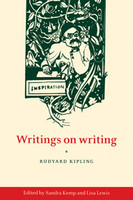
Unlike his contemporaries Virginia Woolf and Henry James, Kipling always denied he was a critic. But his letters, speeches, and stories are full of comments on writing and writers. This collection, including many formerly unpublished private letters and papers, details Kipling's response to the commercialisation of literature and the emerging role of the writer as celebrity in the turbulent literary world of the 1890s and beyond. They reveal a mind intensely concerned with questions of literary value, with language and imagination, with truth, realism, and romanticism. Kipling's fame made him a significant spokesperson for important segments of the reading public - the soldiers, engineers, and functionaries central to Britain's imperial expansion. He profoundly influenced English literary language and our perception of English national character. This book offers access to the private and public history of a writer whose continuing influence is still a matter of fierce controversy.
Over 265 stimulating activities that "turn students on" to writing, while guiding their practice in the writing process -- from prewriting and brainstorming, to first draft, revisions, and a final...
Why do we endlessly tell the stories of our lives? And why do others pay attention when we do? The essays collected here address these questions, focusing on three different but interrelated...