Women's Genealogies in the Medieval Literary Imagination
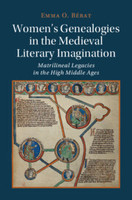
Uncovering the many striking female alternatives to patrilineal narratives in medieval texts, Emma O. Bérat explores strategies of writing and illustration that creatively and purposefully depict women's legacies. Genealogy, used to justify a character's present power and project it onto the future, was crucial to medieval political, literary, and historical thought. While patrilineage often limited women to exceptional or passive roles, other genealogical forms that represent and promote women's claims are widespread in medieval texts. Female characters transmit power through book patronage and reading, enduring landmarks, and international travel, as well as childbearing and succession. These flexible - if messy - genealogies reflect the web of political, biological, and spiritual relations that frequently characterized elite women's lives. Examining hagiography, chronicles, genealogical rolls, and French, English, and Latin romances, as well as associated codices and images, Bérat highlights the centrality of female characters and historical women to this fundamental aspect of medieval consciousness.
Witnesses to the disappearance of a text, palimpsest manuscripts bear the marks of their own genesis, with their original inscription rubbed out and written over on the same parchment. This...
This study of medieval women as postcolonial writers defines the literary strategies of subversion by which they authorized their alterity within the dominant tradition. To dismantle a colonizing...
In The Genealogical Imagination Michael Jackson juxtaposes ethnographic and imaginative writing to explore intergenerational trauma and temporality. Drawing on over fifty years of fieldwork, Jackson...
As an anthropology student studying with Franz Boas, Zora Neale Hurston recorded African American folklore in rural central Florida, studied hoodoo in New Orleans and voodoo in Haiti, talked with the...