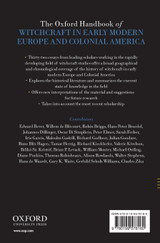
This important collection brings together both established figures and new researchers to offer fresh perspectives on the ever-controversial subject of the history of witchcraft. Using Keith Thomas's Religion and the Decline of Magic as a starting point, the contributors explore the changes of the last twenty-five years in the understanding of early modern witchcraft, and suggest new approaches, especially concerning the cultural dimensions of the subject. Witchcraft cases must be understood as power struggles, over gender and ideology as well as social relationships, with a crucial role played by alternative representations. Witchcraft was always a contested idea, never fully established in early modern culture but much harder to dislodge than has usually been assumed. The essays are European in scope, with examples from Germany, France, and the Spanish expansion into the New World, as well as a strong core of English material.
Men and masculinities are still inadequately incorporated into the historiography of early modern witch trials, despite the fact that 20-25% of all accused 'witches' were male. This book redresses...
Exploring the elements of reality in early modern witchcraft and popular magic, through a combination of detailed archival research and broad-ranging interdisciplinary analyses, this book complements...
Based on extensive archival research, this study of European witchcraft and sorcery takes into account major new developments in the historiography of witchcraft.