Trending Bestseller

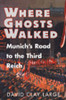
Where Ghosts Walked

David Clay Large

No reviews yet Write a Review
Hardback
08-January-2010
RRP: $85.95
$76.00
Ships in 5–7 business days
Hurry up! Current stock:
Munich was the birthplace of Nazism and became the chief cultural shrine of the Third Reich. In exploring the question of why Nazism flourished in the 'Athens of the Isar', David Clay Large has written a compelling account of the cultural roots of the Nazi movement, allowing us to see that the conventional explanations for the movement's rise are not enough. Large's account begins in Munich's 'golden age', four decades before World War I, when the city's artists and writers produced some of the outstanding work of the modernist spirit. He sees a dark side to the city, a protofascist cultural heritage that would tie Adolf Hitler's movement to its soul. Large prowls his volatile world of seamy basement meeting places, finding that attacks on modernity and liberalism flourished, along with virulent anti-Semitism and German nationalism. From the violent experience of the Munich Soviet, through Hitler's failed Beer-Hall Putsch of 1923 and on to his appointment as German chancellor in 1933, Large unfurls a narrative full of insight and implication.

This product hasn't received any reviews yet. Be the first to review this product!

RRP: $85.95
$76.00
Ships in 5–7 business days
Hurry up! Current stock:

Where Ghosts Walked

RRP: $85.95
$76.00

Description

Munich was the birthplace of Nazism and became the chief cultural shrine of the Third Reich. In exploring the question of why Nazism flourished in the 'Athens of the Isar', David Clay Large has written a compelling account of the cultural roots of the Nazi movement, allowing us to see that the conventional explanations for the movement's rise are not enough. Large's account begins in Munich's 'golden age', four decades before World War I, when the city's artists and writers produced some of the outstanding work of the modernist spirit. He sees a dark side to the city, a protofascist cultural heritage that would tie Adolf Hitler's movement to its soul. Large prowls his volatile world of seamy basement meeting places, finding that attacks on modernity and liberalism flourished, along with virulent anti-Semitism and German nationalism. From the violent experience of the Munich Soviet, through Hitler's failed Beer-Hall Putsch of 1923 and on to his appointment as German chancellor in 1933, Large unfurls a narrative full of insight and implication.

Customers Also Viewed