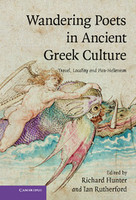
Although recent scholarship has focused on the city-state as the context for the production of Greek poetry, for poets and performers travel was more the norm than the exception. This book traces this central aspect of ancient culture from its roots in the near Eastern societies which preceded the Greeks, through the way in which early semi-mythical figures such as Orpheus were imagined, the poets who travelled to the brilliant courts of archaic tyrants, and on into the fluid mobility of imperial and late antique culture. The emphasis is both on why poets travelled, and on how local communities used the skills of these outsiders for their own purposes. Wandering poets are also set within the wider context of ancient networks of exchange, patronage and affiliation between communities and are seen as one particularly powerful manifestation of a feature of ancient life which is too often overlooked.
This work has been selected by scholars as being culturally important, and is part of the knowledge base of civilization as we know it.This work is in the "public domain in the United States of...
This book is of love, of sadness and a collection of strong emotions. Plus statements of principles. And of course, a number of religious pieces to ponder and consider. Regardless of what side you...
Most classical authors and modern historians depict the ancient Greek world as essentially stable and even static, once the so-called colonization movement came to an end. But Robert Garland argues...