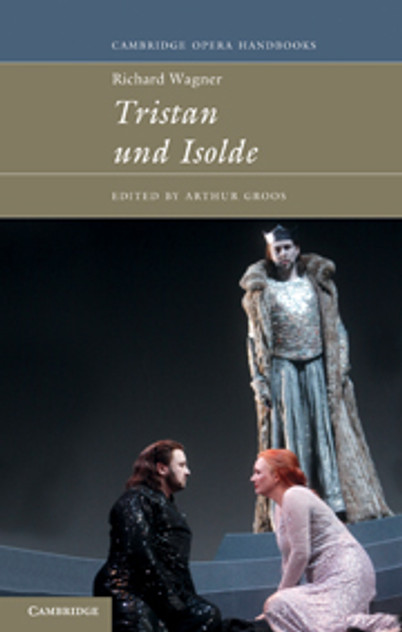
The German poet Mathilde Wesendonck (1828-1902), author of the texts of the Wesendonck Lieder, was the wife of Wagner's patron, the wealthy silk merchant Otto Wesendonck. From 1852 until 1858, the Wagners lived next to the Wesendoncks in Zurich and an intense relationship developed between Wagner and Mathilde, subsequently reflected in the impossible love at the heart of his opera Tristan und Isolde. Prepared by the American musicologist Gustav Kobbé (1857‒1918), who provides a helpful connecting narrative, this 1905 translation of a selection of 'the most intimate and striking' of Wagner's impassioned letters to Mathilde charts the course of the opera's creation. Written between 1853 and 1863, the letters show Wagner thinking aloud not only about Tristan but also the planning of Parsifal. As Mathilde's letters to Wagner were destroyed, the exact nature of their relationship and of her inspiration musically will never be fully established.
This work has been selected by scholars as being culturally important and is part of the knowledge base of civilization as we know it.This work is in the public domain in the United States of...
Studienarbeit aus dem Jahr 1997 im Fachbereich Germanistik - Neuere Deutsche Literatur, Note: 1,3, Ruhr-Universität Bochum, Sprache: Deutsch, Abstract: "Da ich im Leben nie das eigentliche Glück der...