Trending Bestseller

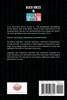
Voicing Code in STEM

No reviews yet Write a Review
Paperback / softback
18-May-2021
232 Pages
$96.00
Ships in 3-5 business days
Hurry up! Current stock:
An exploration of coding that investigates the interplay between computational abstractions and the fundamentally interpretive nature of human experience.
The importance of coding in K-12 classrooms has been taken up by both scholars and educators. Voicing Code in STEM offers a new way to think about coding in the classroom--one that goes beyond device-level engagement to consider the interplay between computational abstractions and the fundamentally interpretive nature of human experience. Building on Mikhail Bakhtin's notions of heterogeneity and heteroglossia, the authors explain how STEM coding can be understood as voicing computational utterances, rather than a technocentric framing of building computational artifacts. Empirical chapters illustrate this theoretical stance by investigating different framings of coding as voicing.

This product hasn't received any reviews yet. Be the first to review this product!

$96.00
Ships in 3-5 business days
Hurry up! Current stock:

Voicing Code in STEM

$96.00

Description

An exploration of coding that investigates the interplay between computational abstractions and the fundamentally interpretive nature of human experience.
The importance of coding in K-12 classrooms has been taken up by both scholars and educators. Voicing Code in STEM offers a new way to think about coding in the classroom--one that goes beyond device-level engagement to consider the interplay between computational abstractions and the fundamentally interpretive nature of human experience. Building on Mikhail Bakhtin's notions of heterogeneity and heteroglossia, the authors explain how STEM coding can be understood as voicing computational utterances, rather than a technocentric framing of building computational artifacts. Empirical chapters illustrate this theoretical stance by investigating different framings of coding as voicing.

Customers Also Viewed