Trending Bestseller

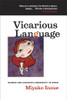
Vicarious Language

Miyako Inoue

No reviews yet Write a Review
Paperback / softback
05-April-2006
$75.00
Ships in 5–7 business days
Hurry up! Current stock:
This highly original study provides an entirely new critical perspective on the central importance of ideas about language in the reproduction of gender, class, and race divisions in modern Japan. Focusing on a phenomenon commonly called "women's language," in modern Japanese society, Miyako Inoue considers the history and social effects of this language form. Drawing on ethnographic fieldwork in a contemporary Tokyo corporation to study the everyday linguistic experience of white-collar females office workers and on historical research from the late nineteenth century to 1930, she calls into question the claim that "women's language" is a Japanese cultural tradition of ancient origin and offers a critical geneaology showing the extent to which this language form is, in fact, a cultural construct linked with Japan's national and capitalist modernity. Her theoretically sophisticated, empirically grounded, interdisciplinary work brilliantly illuminates the relationship between culture and language, the nature of power and subject formation in modernity, and how the complex nexus of gender, language, and political economy are experienced in everyday life.

This product hasn't received any reviews yet. Be the first to review this product!

$75.00
Ships in 5–7 business days
Hurry up! Current stock:

Vicarious Language

$75.00

Description

This highly original study provides an entirely new critical perspective on the central importance of ideas about language in the reproduction of gender, class, and race divisions in modern Japan. Focusing on a phenomenon commonly called "women's language," in modern Japanese society, Miyako Inoue considers the history and social effects of this language form. Drawing on ethnographic fieldwork in a contemporary Tokyo corporation to study the everyday linguistic experience of white-collar females office workers and on historical research from the late nineteenth century to 1930, she calls into question the claim that "women's language" is a Japanese cultural tradition of ancient origin and offers a critical geneaology showing the extent to which this language form is, in fact, a cultural construct linked with Japan's national and capitalist modernity. Her theoretically sophisticated, empirically grounded, interdisciplinary work brilliantly illuminates the relationship between culture and language, the nature of power and subject formation in modernity, and how the complex nexus of gender, language, and political economy are experienced in everyday life.

Customers Also Viewed