Trending Bestseller

Using Analogies in Middle and Secondary Science Classrooms

Allan G. Harrison

No reviews yet Write a Review
Paperback / softback
288 Pages
$98.00
Ships in 5–7 business days
Hurry up! Current stock:
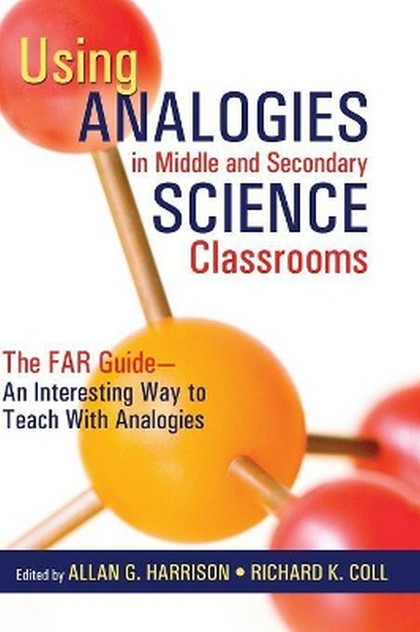
Analogies are often used in science to engage student interest and explain difficult and abstract ideas. While some analogies effectively clarify difficult concepts, many are inadequte or can cause further confusion. Drawing from an extensive research base on the use of analogies in the classroom, Allan Harrison and Richard Coll have compiled more than 40 interesting and effective science analogies that are teacher-friendly and ready for implementation. Using the FAR approach (Focus, Action, and Reflection), the authors show teachers how and when to select analogies for use in instruction, where certain analogies work and where they break down, and how to gauge the effectiveness of certain strategies in the classroom. Using this guidebook, teachers will be able to recognize conceptual problems within many commonly used analogies and learn how to improve them.

This product hasn't received any reviews yet. Be the first to review this product!

$98.00
Ships in 5–7 business days
Hurry up! Current stock:

Using Analogies in Middle and Secondary Science Classrooms

$98.00

Description

Analogies are often used in science to engage student interest and explain difficult and abstract ideas. While some analogies effectively clarify difficult concepts, many are inadequte or can cause further confusion. Drawing from an extensive research base on the use of analogies in the classroom, Allan Harrison and Richard Coll have compiled more than 40 interesting and effective science analogies that are teacher-friendly and ready for implementation. Using the FAR approach (Focus, Action, and Reflection), the authors show teachers how and when to select analogies for use in instruction, where certain analogies work and where they break down, and how to gauge the effectiveness of certain strategies in the classroom. Using this guidebook, teachers will be able to recognize conceptual problems within many commonly used analogies and learn how to improve them.

Customers Also Viewed