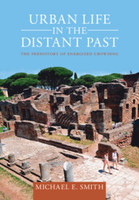
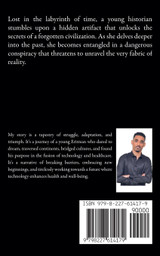
In this book, Michael Smith offers a comparative and interdisciplinary examination of ancient settlements and cities. Early cities varied considerably in their political and economic organization and dynamics. Smith here introduces a coherent approach to urbanism that is transdisciplinary in scope, scientific in epistemology, and anchored in the urban literature of the social sciences. His new insight is 'energized crowding,' a concept that captures the consequences of social interactions within the built environment resulting from increases in population size and density within settlements. Smith explores the implications of features such as empires, states, markets, households, and neighborhoods for urban life and society through case studies from around the world. Direct influences on urban life - as mediated by energized crowding-are organized into institutional (top-down forces) and generative (bottom-up processes). Smith's volume analyzes their similarities and differences with contemporary cities, and highlights the relevance of ancient cities for understanding urbanism and its challenges today.
Lost in the labyrinth of time, a young historian stumbles upon a hidden artifact that unlocks the secrets of a forgotten civilization. As she delves deeper into the past, she becomes entangled in a...
"Can be considered as a real starting point for a biological approach of the pre-Columbian settlement of the Caribbean."-- Benoit Berard, Universite des Antilles For more than a century,...
Earth's population has fallen asleep. Victims of a strange plague.Shem Quentin reawakens into a city transformed into an urban desert by severe storms. Other humans also re-emerge to form various...
Don't miss this much-loved Australian classic that will have readers reaching for the tissues and not wanting the last page to be turned. The sequel Forever More, is now also available.***In the...