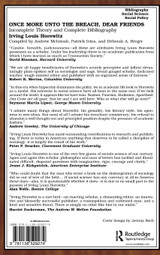
In Unto the Breach, Patricia Cahill demonstrates how England's decisive turn towards warfare in the 1580s gave rise to a theatrical repertory that was at once enthralled with the era's martial discourses and beset by its blinding visions. Examining dramas by Shakespeare, Marlowe, and their contemporaries alongside the period's military manuals and muster books, Cahill offers a richly historicized account of the theatre's sustained engagement with
'modern' warfare. Equally important, she shows that even as martial dramas embraced military science, they routinely trafficked in phenomena resistant to the new rationalities, conjuring up a domain of eerie sounds,
uncanny figures, and haunted temporalities. By going beyond the usual protocols of historicist criticism, Cahill's wide-ranging study traces the contours of early modern traumatic representation and recovers for us a compelling sense of the intimate relationship between affect and intellect on the early modern stage. Intervening in ongoing conversations about the drama's role in shaping the cultural imaginary, Cahill argues that in an era of escalating militarization, England's first
commercial theatres offered their audiences something of incalculable value-namely, a space for the performance and 'working through' of what might otherwise remain psychically unassimilable in war's violence.