Control of illegal drug use and abuse requires an elaborate network of organizations and professions: medical, legal, political, educational, and welfare. This book, first published in 1984, explores the way in which these diverse sectors coordinate the control of deviance in a complex society and how they respond to a sudden widespread increase in deviance spanning many institutional and professional domains. The latter of these concerns, James Beniger argues, affords us a unique insight into the more general question of societal control. He takes as an example of this phenomenon the dramatic appearance of the 'drug problem' in America in the Vietnam war era of the late 1960s and early 1970s. Exploiting this as an approximation of an experimentally induced disruption of society, Professor Beniger examines its impact on the interorganizational and professional networks that together constitute a system for the control of a social deviance.
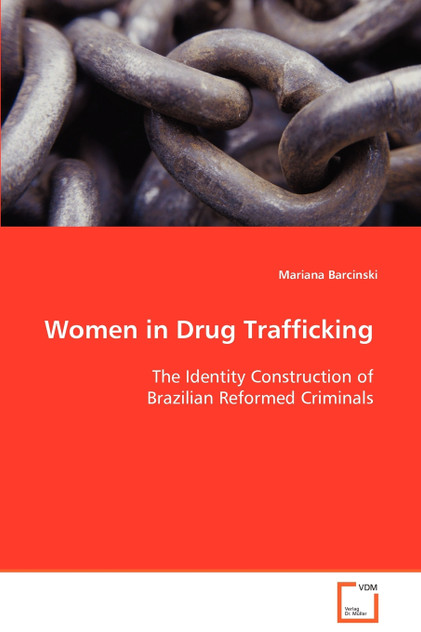
The exercise of including women on the criminological agenda is still in its early stages. Within the field of criminology, the absence of research on female offenders is accounted for by traditional...
The BiblioGov Project is an effort to expand awareness of the public documents and records of the U.S. Government via print publications. In broadening the public understanding of government and its...
June 26 is celebrated as international day against drug abuse and trafficking every year. The purpose is to create awareness and sensitize the people in general and the youth in particular on the...
This work has been selected by scholars as being culturally important, and is part of the knowledge base of civilization as we know it. This work was reproduced from the original artifact, and...
This book describes the main patterns and trends of drug trafficking in Latin America and analyzes its political, economic and social effects on several countries over the last twenty years. Its aim...