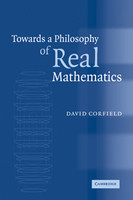
In this ambitious study, David Corfield attacks the widely held view that it is the nature of mathematical knowledge which has shaped the way in which mathematics is treated philosophically and claims that contingent factors have brought us to the present thematically limited discipline. Illustrating his discussion with a wealth of examples, he sets out a variety of approaches to new thinking about the philosophy of mathematics, ranging from an exploration of whether computers producing mathematical proofs or conjectures are doing real mathematics, to the use of analogy, the prospects for a Bayesian confirmation theory, the notion of a mathematical research programme and the ways in which new concepts are justified. His inspiring book challenges both philosophers and mathematicians to develop the broadest and richest philosophical resources for work in their disciplines and points clearly to the ways in which this can be done.
In Nineteen Eighty-Four George Orwell gives a description of different forms of suppression. We learn about the telescreens placed everywhere, through which it is possible for Big-Brother to watch...
Angelo Letizia has crafted a wonderful collection of poems which examine impossibly large questions - What is truth? What is real? How can we know? - and looks for answers in a quizzical examination...
Toward a Concrete Philosophy explores the reactions of Theodor Adorno, Max Horkheimer, and Herbert Marcuse to Martin Heidegger prior to their dismissal of him once he turned to the Nazi party in 1933...
This volume is a collection of K. Satchidananda Murty's unpublished writings. It presents Murty's unpublished keynote addresses, papers presented in seminars, and lectures which show his reflections...
This website brought to you by Margaret Harrell, the author of Toward a Philosophy of Perception. Toward a Philosophy of Perception introduces the Love in Transition series, published in English in...