


Trending Bestseller
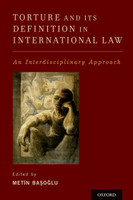
Torture and Its Definition In International Law
This book presents an interdisciplinary approach to definition of torture by a group of prominent scholars of behavioral sciences, international law, human rights, and public health. It represents a first ever attempt to compare behavioral science and international law perspectives on definitional issues and promote a sound theory- and evidence-based understanding of torture.
Paperback / softback
29-October-2017
672 Pages
RRP:
$257.00
$209.00
In Stock:
Ships in 4-6 Working Days

Torture and Its Definition In International Law
RRP:
$257.00
$209.00
Description
This book presents an interdisciplinary approach to definition of torture by bringing together behavioral science and international law perspectives on torture. It is a collaborative effort by a group of prominent scholars of behavioral sciences, international law, human rights, and public health with internationally recognized expertise and authority in their field. It represents a first ever attempt to explore the scientific basis of legal understanding of torture
and inform international law on various definitional issues by proposing a sound theory- and empirical-evidence-based psychological formulation of torture. Drawing on scientific evidence from the
editor's 30 years of systematic research on torture, it proposes a learning theory formulation of torture based on the concept of helplessness under the control of others and offers an assessment methodology that can reduce the element of subjectivity in legal judgments in individual cases. It also demonstrates how this formulation can help understand the nature and severity of ill-treatments in different contexts, such as domestic violence and adverse conditions of penal confinement. Through a
learning theory analysis of "enhanced interrogation techniques," it demonstrates not only why these techniques constitute torture but also how they help us understand the contextual defining
characteristic of torture in general. The proposed formulation implies a broader concept of torture than previously understood, provides scientific and moral justification for the evolving trends in international law towards a broader coverage of ill-treatments in contexts beyond official custody and points to new directions of expansion of the concept. With a focus on the concepts of shame and humiliation and their evolutionary origin, the book explains why inhuman or degrading treatments can
cause as much pain or suffering as physical torture. Although treatment issues are not covered, the book sheds light on potentially effective treatment approaches by offering important insights into
psychology of torture.
