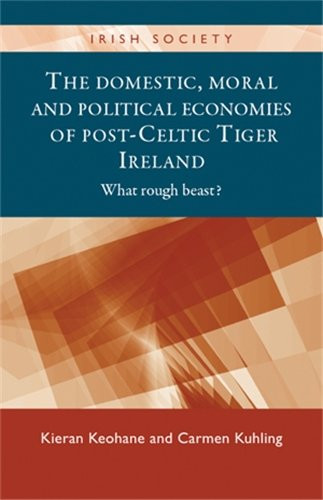
In 2008 Ireland experienced one of the most dramatic economic crises of any economy in the world. It remains at the heart of the international crisis, sitting uneasily between the US and European economies. Not long ago, however, Ireland was celebrated as an example of successful market-led globalisation and economic growth. How can we explain the Irish crisis? What does it tell us about the causes of the international crisis? How should we rethink our understanding of contemporary economies and the workings of economic liberalism based on the Irish experience? This book combines economic sociology and comparative political economy to analyse the causes, dynamics and implications of Ireland's economic 'boom to bust'. It examines the interplay between the financial system, European integration and Irish national politics to show how financial speculation overwhelmed the economic and social development of the 1990s 'Celtic Tiger'.
By 2000, Ireland had achieved a remarkable macroeconomic performance producing 10% economic growth, a budget surplus, and a very low debt to GDP ratio. Emigration had disappeared and there was...
This book offers an accurate and easy to follow explanation of how the Tamil Tigers, who are officially known as the Liberation Tigers of Tamil Eelam (LTTE), was defeated. Who were the major players...
This book provides an analysis of neo-liberal political economics implemented in Ireland and the deleterious consequences of that model in terms of polarised social inequalities, impoverished public...
Celtic Ireland is an unchanged, high-quality reprint of the original edition of 1889.Hansebooks is editor of the literature on different topic areas such as research and science, travel and...