In The Psychologizing of Modernity Mark Jarzombek examines the impact of psychology on twentieth-century aesthetics. Analysing the interface between psychology, art history and avant-gardist practices, he also reflects on the longevity of the myth of aesthetic individuality as it infiltrated not only avant-garde art, but also history writing. The principal focus of this study is pre-World War II Germany, where theories of empathy and Entartung emerged; and post-war America, where artists, critics and historians gradually shifted from their reliance on psychology to philosophy and theory. Included are discussions of writers such as Heinrich Wölfflin, Ludwig Volkmann, John Dewey, Vincent Scully and Richard Arnheim, among others. The Psychologizing of Modernity is a broad and erudite study of the evolution of modern aesthetic thinking in the fields of art and architectural history.
This is a reproduction of a book published before 1923. This book may have occasional imperfections such as missing or blurred pages, poor pictures, errant marks, etc. that were either part of the...
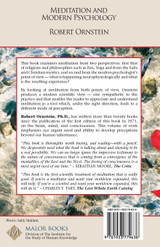
Meditation and Modern Psychology examines meditation from two perspectives: first, from the perspective of religions and philosophies such as Zen, Yoga and those of the Sufis and Christian mystics;...
The tension between Freud's clinical discoveries about the power of human emotions and the theoretical framework in which he embedded these discoveries has been most eloquently detailed by Freud...