Why do politicians and civil servants commission research and what use do they make of it in policymaking? The received wisdom is that research contributes to improving government policy. Christina Boswell challenges this view, arguing that policymakers are just as likely to value expert knowledge for two alternative reasons: as a way of lending authority to their preferences; or to signal their capacity to make sound decisions. Boswell develops a compelling new theory of the role of knowledge in policy, showing how policymakers use research to establish authority in contentious and risky areas of policy. She illustrates her argument with an analysis of European immigration policies, charting the ways in which expertise becomes a resource for lending credibility to controversial claims, underpinning high-risk decisions or bolstering the credibility of government agencies.
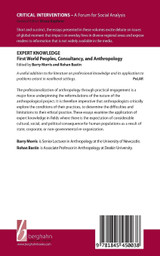
The professionalization of anthropology through practical engagement is a major force underpinning the reformulations of the nature of the anthropological project. It is therefore imperative that...
While much has been written on how political structures, institutional factors, and economic shocks constrain and shape the formulation and implementation of new policy ideas, this book brings to the...
Retaining Expert Knowledge is a training resource, but it is also a business resource. As knowledge proliferates and organizational culture rapidly changes, now is the time to step back and determine...
This book explores tensions in global trade by examining the role of experts in generating, disseminating and legitimating knowledge about the possibilities of trade to work for global...