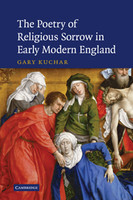
The Poetry of Religious Sorrow in Early Modern England
In early modern England, religious sorrow was seen as a form of spiritual dialogue between the soul and God, expressing how divine grace operates at the level of human emotion. Through close readings of both Protestant and Catholic poetry, Kuchar explains how the discourses of 'devout melancholy' helped generate some of the most engaging religious verse of the period. From Robert Southwell to John Milton, from Aemilia Lanyer to John Donne, the language of 'holy mourning' informed how poets represented the most intimate and enigmatic aspects of faith as lived experience. In turn, 'holy mourning' served as a way of registering some of the most pressing theological issues of the day. By tracing poetic representations of religious sorrow from Crashaw's devotional verse to Shakespeare's weeping kings, Kuchar expands our understanding of the interconnections between poetry, theology and emotion in post-Reformation England.
This study examines the transmission and compilation of poetic texts through manuscripts from the late-Elizabethan era through the mid-seventeenth century, paying attention to the distinctive...
This book analyzes Shakespeare's use of biblical allusions and evocation of doctrinal topics in Hamlet, Measure for Measure, The Winter's Tale, Richard II, and The Merchant...