Although it was influential for several hundred years after it first appeared, doubts about the authenticity of the Platonic Alcibiades I have unnecessarily impeded its interpretation ever since. It positions itself firmly within the Platonic and Socratic traditions, and should therefore be approached in the same way as most other Platonic dialogues. It paints a vivid portrait of a Socrates in his late thirties tackling the unrealistic ambitions of the youthful Alcibiades, urging him to come to know himself and to care for himself. François Renaud and Harold Tarrant re-examine the drama and philosophy of Alcibiades I with an eye on those interpreters who cherished it most. Modern scholars regularly play down one or more of the religious, erotic, philosophic or dramatic aspects of the dialogue, so ancient Platonist interpreters are given special consideration. This rich study will interest a wide range of readers in ancient philosophy.
This is a reproduction of a book published before 1923. This book may have occasional imperfections such as missing or blurred pages, poor pictures, errant marks,...
Platons Alcibiades der Zweite ist ein unveränderter, hochwertiger Nachdruck der Originalausgabe aus dem Jahr 1786.Hansebooks ist Herausgeber von Literatur zu unterschiedlichen Themengebieten wie...
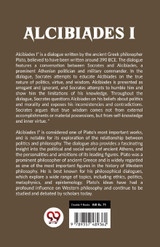
"Alcibiades I" is a dialogue written by the ancient Greek philosopher Plato, believed to have been written around 390 BCE. The dialogue features a conversation between Socrates and Alcibiades, a...
The First Alcibiades is a conversation between Socrates and Alcibiades. Socrates is represented in the character which he attributes to himself in the Apology of a know-nothing who detects the...