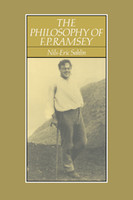
F. P. Ramsey was a remarkably creative and subtle philosopher who in the briefest of academic careers (he died tragically in 1930 aged 26) made significant contributions to logic, philosophy of mathematics, philosophy of language and decision theory. His few published papers reveal him to be a figure or comparable importance to Russell, Carnap and Wittgenstein in the history of analytical philosophy. This book was the first critical study of Ramsey's work, offering a thorough exposition and interpretation of his ideas, setting the ideas in their historical context, and assessing their significance for contemporary research. The study is intended to complement the reissue of Ramsey's papers edited by Professor Hugh Mellor.
A pioneer in the 19th-century "New Age" philosophy known as New Thought, Phineas Quimby developed a system of mental healing that put right the "disordered mind" that, he believed, creates disease...
Byrhtferth of Ramsey was one of the most learned scholars of late Anglo-Saxon England, and his two saints' Lives-of Oswald, a powerful bishop of Worcester and York in the tenth century (d. 992), and...