
The New Politics of Immigration and the End of Settler Societies
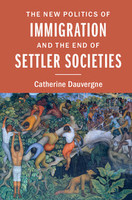
Over the past decade, a global convergence in migration policies has emerged, and with it a new, mean-spirited politics of immigration. It is now evident that the idea of a settler society, previously an important landmark in understanding migration, is a thing of the past. What are the consequences of this shift for how we imagine immigration? And for how we regulate it? This book analyzes the dramatic shift away from the settler society paradigm in light of the crisis of asylum, the fear of Islamic fundamentalism, and the demise of multiculturalism. What emerges is a radically original take on the new global politics of immigration that can explain policy paralysis in the face of rising death tolls, failing human rights arguments, and persistent state desires to treat migration as an economic calculus.
Why have settler societies, such as Australia, Canada, and New Zealand moved to the forefront of multi-cultural change? This question is addressed in this comparative study. David Pearson explores...
This six-volume set focuses on Latin American, Caribbean, and Asian immigration, which accounts for nearly 80 percent of all new immigration to the United States. The volumes contain the essential...
Settlers at the end of empire traces the development of racialised migration regimes in South Africa, Rhodesia (present-day Zimbabwe) and the United Kingdom from the Second World War to the end of...
The struggle between Israel and the Palestinians is not unique, whatever the media may suggest. Lorenzo Veracini argues that the conflict is best understood in terms of colonialism, as like many...