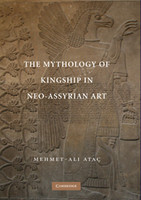

The relief slabs that decorated the palaces of the Neo-Assyrian Empire, which emphasized military conquest and royal prowess, have traditionally been understood as statements of imperial propaganda that glorified the Assyrian king. In this book, Mehmet-Ali Ataç argues that the reliefs hold a deeper meaning that was addressed primarily to an internal audience composed of court scholars and master craftsmen. Ataç focuses on representations of animals, depictions of the king as priest and warrior, and figures of mythological beings that evoke an archaic cosmos. He demonstrates that these images mask a complex philosophical rhetoric developed by court scholars in collaboration with master craftsmen who were responsible for their design and execution. Ataç argues that the layers of meaning embedded in the Neo-Assyrian palace reliefs go deeper than politics, imperial propaganda, and straightforward historical record.
Like many other belief systems hailing from this region, Assyrian mythology had an incredibly long-standing effect on other cultures and religions. Flourishing between 1900 BCE to 650 CE, Assyria has...
How did the people from the Assyrian and Neo-Assyrian Empire live? Now is your chance to peek through the past by opening the pages of this wonderful educational resource. Learn from the lessons of...
The Royal Inscriptions of Sennacherib, King of Assyria (704–681 BC), Part 1 (Royal Inscriptions of the Neo-Assyrian Period 3/1) provides reliable, up-to-date editions of thirty-eight historical...
During the Neo-Assyrian period, the scale-armours surely represented a massive investment of time, human and material resources, which can be understood as they appear to be mentioned in the booty...
This work has been selected by scholars as being culturally important, and is part of the knowledge base of civilization as we know it.This work is in the "public domain in the United States of...