sale
Trending Bestseller

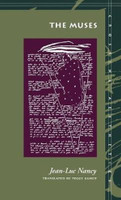
The Muses

Jean-Luc Nancy

No reviews yet Write a Review
Hardback
136 Pages
RRP: $166.75
$141.00
In Stock: Ships in 3-5 Days
In Stock: Ships in 7-9 Days
Hurry up! Current stock:

undefinedA truly exhilarating set of philosophical reflections on art and aesthetics. From the caves of Lascaux to Caravaggioundefineds Death of the Virgin to the postmodern question of the marketplace and the undefinedendundefined of art, Nancy masterfully explicates the threshold role art plays in the philosophical distinctions between the sensory and the sensible, life and death, presentation and representation. Art is also compellingly shown to be the foundational category for any concept of religion, technology, or even undefinedhumanity.undefinedundefined

undefinedGeorges Van Den Abbeele, University of California, Davis

This book, by one of the most challenging contemporary thinkers, begins with an essay that introduces the principal concern sustained in the four succeeding ones: Why are there several arts and not just one? This question focuses on the point of maximal tension between the philosophical tradition and contemporary thinking about the arts: the relation between the plurality of the human sensesundefinedto which the plurality of the arts has most frequently been referredundefinedand sense or meaning in general.

Throughout the five essays, Nancyundefineds argument hinges on the culminating formulation of this relation in Hegelundefineds Aesthetics and The Phenomenology of Spiritundefinedart as the sensible presentation of the Idea. Demonstrating once again his renowned ability as a reader of Hegel, Nancy scrupulously and generously restores Hegelundefineds historical argument concerning art as a thing of the past, as that which is negated by the dialectic of Spirit in the passage from aesthetic religion to revealed religion to philosophy.

In the bookundefineds second essay, Nancy reads what he calls Hegelundefineds undefinedsecretundefined (a secret even from Hegel): the emergence of art as presentation rather than representation. This intricate and compelling reading is key to the remaining essays: a virtuoso reading of Caravaggioundefineds Death of the Virgin; an analysis of a traced hand in the grotto of Lascaux as the essential mimetic gesture, the monstration of self outside of self; and an account of the contemporary situation of art, including the question whether art today is still art. Nancy is among the very few present-day thinkers who ask rigorous and sustained questions about art and the practice of thinking about art.

Meridian: Crossing Aesthetic

This product hasn't received any reviews yet. Be the first to review this product!

RRP: $166.75
$141.00
In Stock: Ships in 3-5 Days
In Stock: Ships in 7-9 Days
Hurry up! Current stock:

The Muses

RRP: $166.75
$141.00

Description

undefinedA truly exhilarating set of philosophical reflections on art and aesthetics. From the caves of Lascaux to Caravaggioundefineds Death of the Virgin to the postmodern question of the marketplace and the undefinedendundefined of art, Nancy masterfully explicates the threshold role art plays in the philosophical distinctions between the sensory and the sensible, life and death, presentation and representation. Art is also compellingly shown to be the foundational category for any concept of religion, technology, or even undefinedhumanity.undefinedundefined

undefinedGeorges Van Den Abbeele, University of California, Davis

This book, by one of the most challenging contemporary thinkers, begins with an essay that introduces the principal concern sustained in the four succeeding ones: Why are there several arts and not just one? This question focuses on the point of maximal tension between the philosophical tradition and contemporary thinking about the arts: the relation between the plurality of the human sensesundefinedto which the plurality of the arts has most frequently been referredundefinedand sense or meaning in general.

Throughout the five essays, Nancyundefineds argument hinges on the culminating formulation of this relation in Hegelundefineds Aesthetics and The Phenomenology of Spiritundefinedart as the sensible presentation of the Idea. Demonstrating once again his renowned ability as a reader of Hegel, Nancy scrupulously and generously restores Hegelundefineds historical argument concerning art as a thing of the past, as that which is negated by the dialectic of Spirit in the passage from aesthetic religion to revealed religion to philosophy.

In the bookundefineds second essay, Nancy reads what he calls Hegelundefineds undefinedsecretundefined (a secret even from Hegel): the emergence of art as presentation rather than representation. This intricate and compelling reading is key to the remaining essays: a virtuoso reading of Caravaggioundefineds Death of the Virgin; an analysis of a traced hand in the grotto of Lascaux as the essential mimetic gesture, the monstration of self outside of self; and an account of the contemporary situation of art, including the question whether art today is still art. Nancy is among the very few present-day thinkers who ask rigorous and sustained questions about art and the practice of thinking about art.

Meridian: Crossing Aesthetic

Customers Also Viewed