While love is private, and in medieval literature especially is seen as demanding secrecy, to tell stories about it is to make it public. Looking, often accompanied by listening, is the means by which love is brought into the public realm and by which legal evidence of adulterous love can be obtained. Medieval romances contain many scenes in which secret watchers and listeners play leading roles, and in which the problematic relation of sight to truth is a central theme. The effect of such scenes is to place the poem's audience as secret watchers and listeners; and in later medieval narratives, as the role of the storyteller comes to be realized, the poet too sees himself in the undignified role of a voyeur. A. C. Spearing's book explores these and related themes, first in relation to medieval and modern theories and instances of looking, and then through a series of readings of romances and first-person narratives, including works by Beroul, Gottfried von Strassburg, Chrétien de Troyes, Marie de France, Chaucer, Lydgate, Douglas, Dunbar, and Skelton. Its focus on looking also leads to the recovery of some less well-known works such as Partonope of Blois and The Squire of Low Degree. The general approach is psychoanalytic, but the reading of specific medieval texts always has primacy, and this in turn makes possible a running critique of current conceptions of the gaze in relation to power and gender.
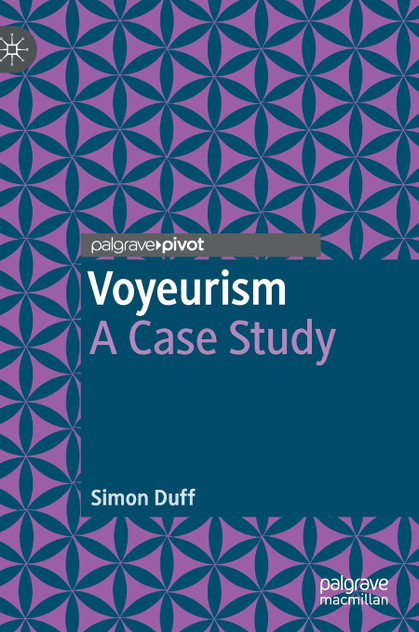
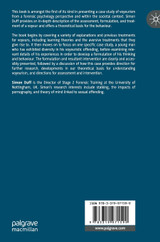
This book is amongst the first of its kind in presenting a case study of voyeurism from a forensic psychology perspective and within the societal context. Simon Duff provides an in-depth description...
When Mathias, a travelling watch salesman, returns after many years to the island of his birth, a young girl is found dead on the rocks. As Mathias makes an increasingly tense recapitulation of his...
The word damaged is often used to describe people who have had horrible childhoods, or who, as adults, have been treated treacherously by another. My way of coming to terms with my emotional pain is...