sale
Trending Bestseller

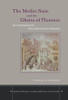
The Medici State and the Ghetto of Florence

Stefanie B. Siegmund

No reviews yet Write a Review
Hardback
656 Pages
RRP: $167.25
$141.00
Ships in 5–7 business days
Hurry up! Current stock:
The Medici State and the Ghetto of Florence is a work about Italian Jews, Christians, and the institutions and policies that organized their relationship. It sets the 1570 decision of the Medici government to ghettoize the Jews of Florence in the context of early modern statecraft and in the climate of the Catholic (or Counter.) Reformation. While readers have had access to studies of the ghettos of Rome and Venice, this is the first study of the Jews of Florence available in English, and the first and only study of the Florentine ghetto based on sustained archival research. The story of the forced ghettoization of Tuscan Jews allows the author to explore the "spatialization of power," the construction of Jewish community, and the reorganization of gender roles, leading to three broad arguments of great significance to readers intersted in Italian history, Jewish history, urban history, and the history of women.

This product hasn't received any reviews yet. Be the first to review this product!

RRP: $167.25
$141.00
Ships in 5–7 business days
Hurry up! Current stock:

The Medici State and the Ghetto of Florence

RRP: $167.25
$141.00

Description

The Medici State and the Ghetto of Florence is a work about Italian Jews, Christians, and the institutions and policies that organized their relationship. It sets the 1570 decision of the Medici government to ghettoize the Jews of Florence in the context of early modern statecraft and in the climate of the Catholic (or Counter.) Reformation. While readers have had access to studies of the ghettos of Rome and Venice, this is the first study of the Jews of Florence available in English, and the first and only study of the Florentine ghetto based on sustained archival research. The story of the forced ghettoization of Tuscan Jews allows the author to explore the "spatialization of power," the construction of Jewish community, and the reorganization of gender roles, leading to three broad arguments of great significance to readers intersted in Italian history, Jewish history, urban history, and the history of women.

Customers Also Viewed