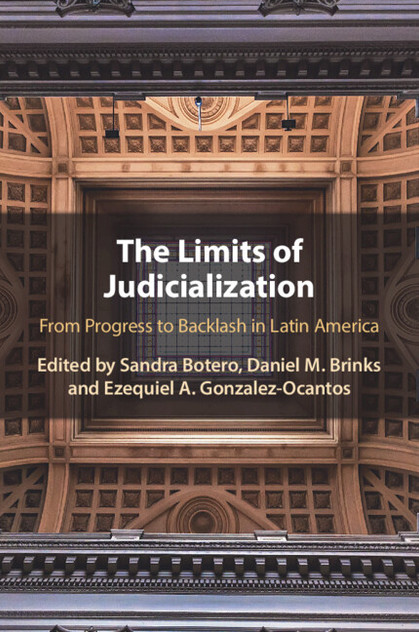
This book investigates the causes and consequences of congressional attacks on the US Supreme Court, arguing that the extent of public support for judicial independence constitutes the practical limit of judicial independence. First, the book presents a historical overview of Court-curbing proposals in Congress. Then, building on interviews with Supreme Court justices, members of Congress, and judicial and legislative staffers, the book theorizes that congressional attacks are driven by public discontent with the Court. From this theoretical model, predictions are derived about the decision to engage in Court-curbing and judicial responsiveness to Court-curbing activity in Congress. The Limits of Judicial Independence draws on illustrative archival evidence, systematic analysis of an original dataset of Court-curbing proposals introduced in Congress from 1877 onward and judicial decisions.
The Making of the Modern Law: Legal Treatises, 1800-1926 includes over 20,000 analytical, theoretical and practical works on American and British Law. It includes the writings of...
" The authors provide an excellent examination of judicial independence that tends to raise more questions than answers...a fascinating book that raises important questions about a concept that is...
The BiblioGov Project is an effort to expand awareness of the public documents and records of the U.S. Government via print publications. In broadening the public understanding of government and its...