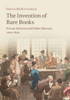
When does a book that is merely old become a rarity and an object of desire? David McKitterick examines, for the first time, the development of the idea of rare books, and why they matter. Studying examples from across Europe, he explores how this idea took shape in the sixteenth and seventeenth centuries, and how collectors, the book trade and libraries gradually came together to identify canons that often remain the same today. In a world that many people found to be over-supplied with books, the invention of rare books was a process of selection. As books are one of the principal means of memory, this process also created particular kinds of remembering. Taking a European perspective, McKitterick looks at these interests as they developed from being matters of largely private concern and curiosity, to the larger public and national responsibilities of the first half of the nineteenth century.
The Book of Inventions: Or The Practical and Economical Results of the Application of Art and Science is a historical book written by Clifton Cleve and published in 1848. The book is a comprehensive...
This book has been considered by academicians and scholars of great significance and value to literature. This forms a part of the knowledge base for future generations. So that the book is never...
This work has been selected by scholars as being culturally important, and is part of the knowledge base of civilization as we know it.This work is in the "public domain in the United States of...