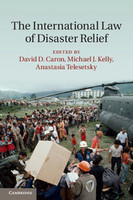
Disasters can strike often and with unexpected fury, resulting in devastating consequences for local populations that are insufficiently prepared and largely dependent upon foreign aid in the wake of such catastrophes. International law can play a significant role in recovery after natural disasters; however, without clear legal frameworks, aid may be stopped, delayed, or even hijacked - placing the intended recipients in critical condition. This edited volume brings together experts, emerging scholars, and practitioners from North America, Japan, New Zealand, and Australia to analyze the evolution of international disaster law as a field that encompasses new ideas about human rights, sovereignty, and technology. Chapters focus on specific natural disasters like Hurricane Katrina, Cyclone Nargis, and Typhoon Haiyan in addition to volcanic and earthquake activity, wildfires, and desertification. This book begins a dialogue on the profound implications of the evolution of international law as a tool for disaster response.
The BiblioGov Project is an effort to expand awareness of the public documents and records of the U.S. Government via print publications. In broadening the public understanding of government and its...
This work has been selected by scholars as being culturally important, and is part of the knowledge base of civilization as we know it.This work is in the "public domain in the United States of...
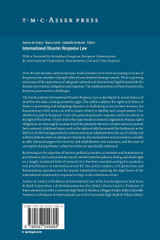
With a Foreword by Kristalina Georgieva, European Commissioner for International Cooperation, Humanitarian Aid and Crisis ResponseOver the last decades natural and man-made disasters have been...
This book is a guide for Logistician's (civilian or military) in the execution of support to Disaster Relief efforts. . Provides a foundation to plan and coordinate at the federal, state, and...