Trending Bestseller

The Hungry Steppe

Sarah Cameron

No reviews yet Write a Review
Paperback / softback
294 Pages
$62.00
Ships in 5–7 business days
Hurry up! Current stock:

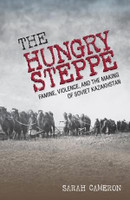
The Hungry Steppe examines one of the most heinous crimes of the Stalinist regime, the Kazakh famine of 1930-33. More than 1.5 million people perished in this famine, a quarter of Kazakhstan's population, and the crisis transformed a territory the size of continental Europe. Yet the story of this famine has remained mostly hidden from view. Drawing upon state and Communist party documents, as well as oral history and memoir accounts in Russian and in Kazakh, Sarah Cameron reveals this brutal story and its devastating consequences for Kazakh society.

Through the most violent of means the Kazakh famine created Soviet Kazakhstan, a stable territory with clearly delineated boundaries that was an integral part of the Soviet economic system; and it forged a new Kazakh national identity. But this state-driven modernization project was uneven. Ultimately, Cameron finds, neither Kazakhstan nor Kazakhs themselves were integrated into the Soviet system in precisely the ways that Moscow had originally hoped. The experience of the famine scarred the republic for the remainder of the Soviet era and shaped its transformation into an independent nation in 1991.

Cameron uses her history of the Kazakh famine to overturn several assumptions about violence, modernization, and nation-making under Stalin, highlighting, in particular, the creation of a new Kazakh national identity, and how environmental factors shaped Soviet development. Ultimately, The Hungry Steppe depicts the Soviet regime and its disastrous policies in a new and unusual light.

The Hungry Steppe examines one of the most heinous crimes of the Stalinist regime: the Kazakh famine of 1930-33. More than 1.5 million people, a quarter of Kazakhstan's population, perished. Yet the story of this famine has remained mostly hidden from view. Sarah Cameron reveals this brutal story and its devastating consequences for Kazakh society.

Through extremely violent means, the Kazakh famine created Soviet Kazakhstan, a stable territory with clear boundaries that was an integral part of the Soviet economy; and it forged a new Kazakh national identity. But ultimately, Cameron finds, neither Kazakhstan nor Kazakhs themselves integrated into Soviet society the way Moscow intended. The experience of the famine scarred the republic and shaped its transformation into an independent nation in 1991.

Cameron examines the Kazakh famine to overturn several assumptions about violence, modernization, and nation-making under Stalin, highlighting the creation of a new Kazakh national identity and how environmental factors shaped Soviet development. Ultimately, The Hungry Steppe depicts the Soviet regime and its disastrous policies in a new and unusual light.
This product hasn't received any reviews yet. Be the first to review this product!

$62.00
Ships in 5–7 business days
Hurry up! Current stock:

The Hungry Steppe

$62.00

Description

The Hungry Steppe examines one of the most heinous crimes of the Stalinist regime, the Kazakh famine of 1930-33. More than 1.5 million people perished in this famine, a quarter of Kazakhstan's population, and the crisis transformed a territory the size of continental Europe. Yet the story of this famine has remained mostly hidden from view. Drawing upon state and Communist party documents, as well as oral history and memoir accounts in Russian and in Kazakh, Sarah Cameron reveals this brutal story and its devastating consequences for Kazakh society.

Through the most violent of means the Kazakh famine created Soviet Kazakhstan, a stable territory with clearly delineated boundaries that was an integral part of the Soviet economic system; and it forged a new Kazakh national identity. But this state-driven modernization project was uneven. Ultimately, Cameron finds, neither Kazakhstan nor Kazakhs themselves were integrated into the Soviet system in precisely the ways that Moscow had originally hoped. The experience of the famine scarred the republic for the remainder of the Soviet era and shaped its transformation into an independent nation in 1991.

Cameron uses her history of the Kazakh famine to overturn several assumptions about violence, modernization, and nation-making under Stalin, highlighting, in particular, the creation of a new Kazakh national identity, and how environmental factors shaped Soviet development. Ultimately, The Hungry Steppe depicts the Soviet regime and its disastrous policies in a new and unusual light.
The Hungry Steppe examines one of the most heinous crimes of the Stalinist regime: the Kazakh famine of 1930-33. More than 1.5 million people, a quarter of Kazakhstan's population, perished. Yet the story of this famine has remained mostly hidden from view. Sarah Cameron reveals this brutal story and its devastating consequences for Kazakh society.

Through extremely violent means, the Kazakh famine created Soviet Kazakhstan, a stable territory with clear boundaries that was an integral part of the Soviet economy; and it forged a new Kazakh national identity. But ultimately, Cameron finds, neither Kazakhstan nor Kazakhs themselves integrated into Soviet society the way Moscow intended. The experience of the famine scarred the republic and shaped its transformation into an independent nation in 1991.

Cameron examines the Kazakh famine to overturn several assumptions about violence, modernization, and nation-making under Stalin, highlighting the creation of a new Kazakh national identity and how environmental factors shaped Soviet development. Ultimately, The Hungry Steppe depicts the Soviet regime and its disastrous policies in a new and unusual light.

Customers Also Viewed