Stephen Fredman asserts in his work that American poetry is groundless - that each generation of American poets faces the problem of identity anew and has to discover fresh meaning for itself. His argument focuses on four pairs of poets - Eliot/Williams, Thoreau/Olson, Emerson/Duncan and Whitman/Creeley - and points out that although the later ones all were influenced by their predecessors to some extent, ultimately their poetry is, paradoxically, grounded in an essential groundlessness. In order to demonstrate how approaches to groundlessness have persisted over time, Fredman explores the various measures taken by these American poets to provide a provisional ground upon which to construct their poetry: inventing idiosyncratic traditions, forming poetic communities, engaging in polemical prose, assessing all the dimensions of particular places and treating words as emblematic and mysterious objects. At the very core of the book stands Charles Olson, whose work so dramatically articulates the whole range of issues arising from the American poet's anxious search for and resistance t, an authentic and unified tradition.
This anthology of American poetry is an indispensable resource for lovers of poetry and literature. From the early colonial period to the twentieth century, Percy Holmes Boyton presents a wide range...
This is a reproduction of a book published before 1923. This book may have occasional imperfections such as missing or blurred pages, poor pictures,...
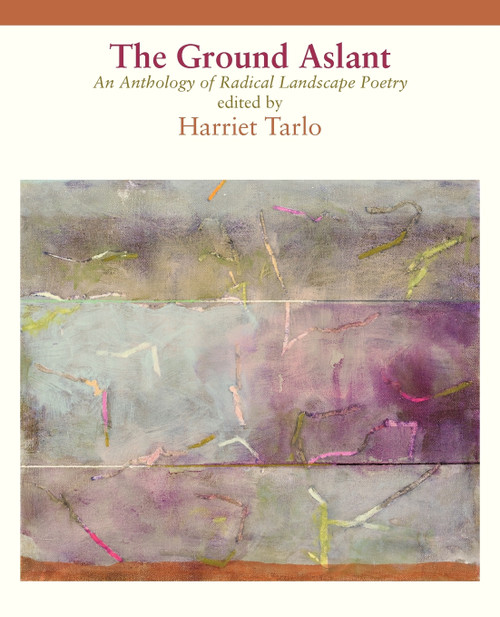
Recent years have seen the arrival of new approaches to writing about landscape. Partly to do with new eco-sensibilities, this is however also due to a realisation that "landscape writing" need not...