This book is concerned with the central act of Christian worship, call it Eucharist, Holy Communion, Liturgy, Last Supper or Mass. First it investigates in some detail the New Testament accounts of its institution at the Last Supper, dealing with the problems of scholarship involved. Professor Kilpatrick argues that Mark XIV and I Corinthians XI are basic, Mark being more archaic. Secondly, the book examines three themes of the Eucharist which are foreign to Western thinking of today: sacrifice, the sacred meal and the pattern of charter story and ritual. This pattern is common ground to anthropologists and biblical scholars. It is argued that the observance is not a Passover but a sacrifice in Biblical terms and certain features which we find in Biblical sacrifice have parallels in the religion of ancient Rome and Greece. The bearing of these conclusions on present-day liturgical revision is then discussed.
In graduate theology programs across the United States and elsewhere, Maxwell Johnson's The Rites of Christian Initiation: Their Evolution and Interpretation has become a standard text. Now...
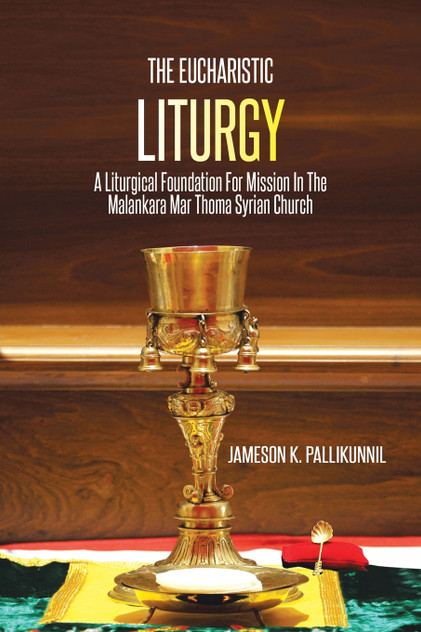
The Malankara Mar Thoma Syrian Church exists as a “hybrid church” by blending the Eastern liturgical elements of the Oriental Orthodox Church and the evangelical ideas of the Protestant Reformation...
This study proceeds historically, from the origins of the Eucharist up to our own day. Unlike most studies of this kind, it includes an introduction to and developmental summary of the diverse...
Since its institution, the Eucharist has been celebrated in all churches regardless of denominational differences. Yet its importance should not be just confined to the Christian communities; it can...