In recent decades, religion's traditional distinctiveness under the First Amendment has been challenged by courts and scholars. As America grows more secular and as religious and nonreligious convictions are increasingly seen as interchangeable, many have questioned whether special treatment is still fair. In its recent decisions, the Supreme Court has made clear that religion will continue to be treated differently, but we lack a persuasive account of religion's uniqueness that can justify this difference. This book aims to develop such an account. Drawing on founding era thought illumined by theology, philosophy of religion, and comparative religion, it describes what is at stake in our tradition of religious freedom in a way that can be appreciated by the religious and nonreligious alike. From this account, it develops a new framework for religion clause decision making and explains the implications of this framework for current controversies regarding protections for religious conscience.
The Making of the Modern Law: Legal Treatises, 1800-1926 includes over 20,000 analytical, theoretical and practical works on American and British Law. It includes the writings of major legal...
A comprehensive survey of the legal history of race in the United States, from slavery and Jim Crow to civil rights and affirmative action. Stephenson provides a meticulous analysis of the complex...
There is much change underway in American higher education. New technologies are challenging the teaching practices of yesterday, distance learning is lauded, and private firms offer to certify the...
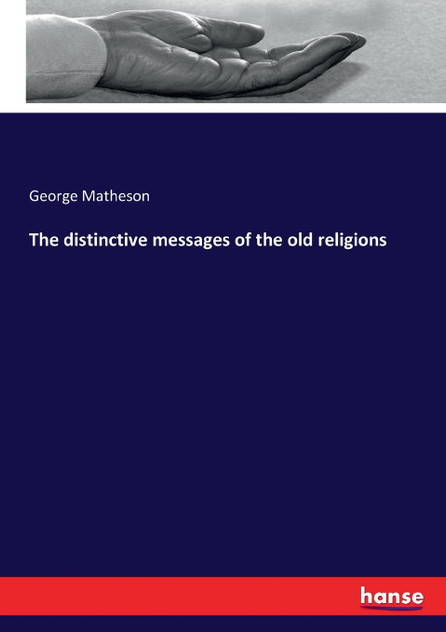
The distinctive messages of the old religions is an unchanged, high-quality reprint of the original edition of 1893.Hansebooks is editor of the literature on different topic areas such as research...