
One of the main themes that has emerged from behavioral decision research during the past three decades is the view that people's preferences are often constructed in the process of elicitation. This idea is derived from studies demonstrating that normatively equivalent methods of elicitation (e.g., choice and pricing) give rise to systematically different responses. These preference reversals violate the principle of procedure invariance that is fundamental to all theories of rational choice. If different elicitation procedures produce different orderings of options, how can preferences be defined and in what sense do they exist? This book shows not only the historical roots of preference construction but also the blossoming of the concept within psychology, law, marketing, philosophy, environmental policy, and economics. Decision making is now understood to be a highly contingent form of information processing, sensitive to task complexity, time pressure, response mode, framing, reference points, and other contextual factors.
This is a reproduction of a book published before 1923. This book may have occasional imperfections such as missing or blurred pages, poor pictures, errant marks, etc. that were either part of the...
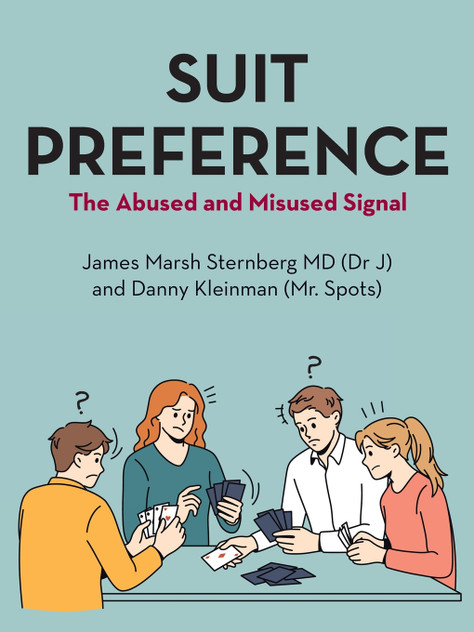
SUIT PREFERENCE SIGNALSIf there was ever an area in bridge that resembles walking thru a mine field this is it. No topic causes more confusion and arguments than suit preference signals. "Partner, I...
One dark night an eccentric resident in Matthew's small town is beaten to death...Young family physician Matthew Paine is called to the scene of the murder. Having signed on as a medical consultant...