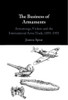
How did Britain's most prominent armaments firms, Armstrongs and Vickers, build their businesses and sell armaments in Britain and overseas from 1855 to 1955? Joanna Spear presents a comparative analysis of these firms and considers the relationships they built with the British Government and foreign states. She reveals how the firms developed and utilized independent domestic strategies and foreign policies against the backdrop of imperial expansion and the two world wars. Using extensive new research, this study examines the challenges the two firms faced in making domestic and international sales including the British Government's commitment to laissez faire policies, prejudices within the British elite against those in trade, and departmental resistance to dealing with private firms. It shows the suite of strategies and tactics that the firms developed to overcome these obstacles to selling arms at home and abroad and how they built enduring relationships with states in Latin America, Asia, and the Middle East.
Armaments and Arbitration: Or The Place of Force in the International Relations of States is a book written by Alfred Thayer Mahan in 1912. Mahan was a renowned American naval officer and historian...
This is a reproduction of a book published before 1923. This book may have occasional imperfections such as missing or blurred pages, poor pictures, errant marks,...
This work has been selected by scholars as being culturally important, and is part of the knowledge base of civilization as we know it.This work is in the "public domain in the United States of...
The Evolution of Naval Armament, is many of the old classic books which have been considered important throughout the human history. They are now extremely scarce and very expensive antique. So that...
This is a reproduction of a book published before 1923. This book may have occasional imperfections such as missing or blurred pages, poor pictures, errant marks,...