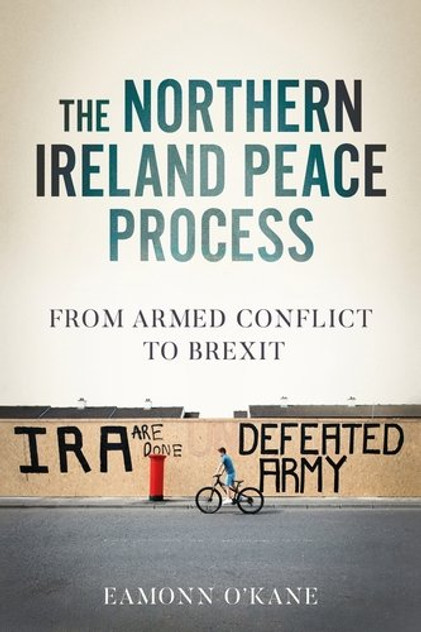
How did the British Government and Civil Service shape the Northern Ireland peace process? What kind of tensions and debates were being played out between the two governments and the various parties in Northern Ireland? Addressing texts, negotiations, dialogues, space, leverage, strategy, ambiguity, interpersonal relations and convergence, this is the first volume to examine how senior British officials and civil servants worked to bring about power-sharing in Northern Ireland. With a unique format featuring self-authored inside accounts and interview testimonies, it considers a spectrum of areas and issues that came into play during the dialogues and negotiations that led to the 1998 Good Friday Agreement and political accommodation in Northern Ireland. This book provides a compelling insight into what actually happened inside the negotiating room and how the British tried to shape the course of negotiations.
This book offers a re-evaluation of the emergence, development and outcome of the peace process in Northern Ireland. Drawing on interviews with many of the key participants of the peace process,...
The fundamental change in policing that began in 2001 was a critical part of the Northern Ireland peace process. Seventy years after its establishment the Royal Ulster Constabulary (RUC) remained...
Politics and peace in Northern Ireland analyses the complex and contradictory process of implementing the Good Friday Agreement. Using the lens of security dilemma theory, it begins with an original...
The book explores the relationship between leadership, language and sustainable peace through a case study of the Northern Ireland peace process. The author challenges traditional approaches to...