The Armistice of Mudros was signed on 30 October 1918 and on the morning of 13 November 1918, a mighty fleet of battleships from Britain, France, Italy and Greece sailed to Istanbul, and dropped anchor without encountering resistance. This day marked the beginning of the end of the Ottoman Empire, a dissolution that would bring great suffering and chaos, but also new opportunities for all Ottomans, Muslim and non-Muslim alike. Drawing upon a previously untouched collection of Armenian and Ottoman Turkish primary sources, Ari Şekeryan considers these understudied post-war years. Examining the Armenian community as they emerged from the aftermath of war and genocide, Şekeryan outlines their shifting political position and the strategies they used to survive this turbulent period. By focusing on the Ottoman Armistice (1918-1923), Şekeryan illuminates an oft-neglected period in history, and develops a new case study for understanding the political reactions of ethnic groups to the fall of empires and nation-states.
First published in 1977. Although hundreds of books have been published on the Armenian question and massacres, very little is known about their services in the cultural, economic and administrative...
This scarce antiquarian book is a facsimile reprint of the original. Due to its age, it may contain imperfections such as marks, notations, marginalia and flawed pages. Because we believe this work...
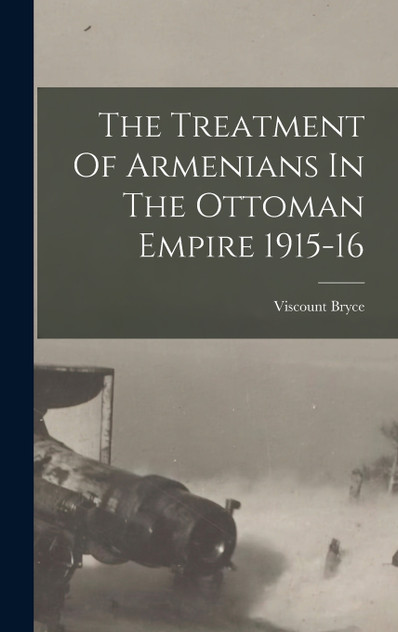
The Treatment of Armenians in the Ottoman Empire is a historical book written by Arnold Joseph Toynbee in 1916. The book is a detailed account of the atrocities committed against the Armenian...
This work has been selected by scholars as being culturally important, and is part of the knowledge base of civilization as we know it.This work is in the "public domain in the United States of...