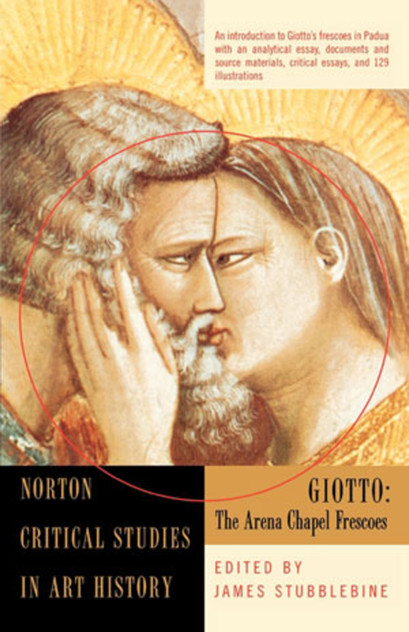
This book offers an analysis of Giotto's painted architecture, focusing on issues of structural logic, clarity of composition, and its role within the narrative of the painting. Giotto was the first artist since antiquity to feature highly-detailed architecture in a primary role in his paintings. Francesco Benelli demonstrates how architecture was used to create pictorial space, one of Giotto's key inventions. He argues that Giotto's innovation was driven by a new attention to classical sources, including low reliefs, mosaics, mural paintings, coins, and Roman ruins. The book shows how Giotto's images of fictive buildings, as well as portraits of well-known monuments, both ancient and contemporary, play an important role in the overall narrative, iconography, and meaning of his works. The conventions established by Giotto remained at the heart of early modern Italian painting until the sixteenth century.
Moschetti's work provides a detailed analysis of the Scrovegni Chapel in Padua, Italy, and the frescoes painted there by Giotto. He examines the history and significance of the chapel, as well as the...
Many of the earliest books, particularly those dating back to the 1900s and before, are now extremely scarce and increasingly expensive. We are republishing these classic works in affordable, high...
Each volume includes all the necessary materials for the comprehensive study of a work of art: An illustration section showing the complete work of art, details, preliminary studies, and...
This work has been selected by scholars as being culturally important, and is part of the knowledge base of civilization as we know it.This work is in the "public domain in the United States of...