First published in 1891, this book was the earliest attempt to construct a systematic classification of all the indigenous languages of the Americas, focusing particularly on the relationship between culture and grammar and vocabulary. It addresses the various theories of the origins of the American race, and the archaeological evidence for the presence of humans in the Americas. It discusses geologists' opinions and the physical geography of the Americas in relation to Europe, and considers the physical characteristics of the Native Americans, their culture, religion, domestic habits and family organisation, providing a comprehensive anthropological and historical context for the linguistic work. Special attention is paid to the parts of the continent, mostly south of Mexico, whose ethnography was little known at the time of writing. Each chapter covers a particular region, and there is a detailed linguistic appendix.
As soon as there were automobiles, there was racing. The first recorded race, an over road event from Paris to Rouen, France, was organized by the French newspaper Le Petit Journal in 1894. Seeing...
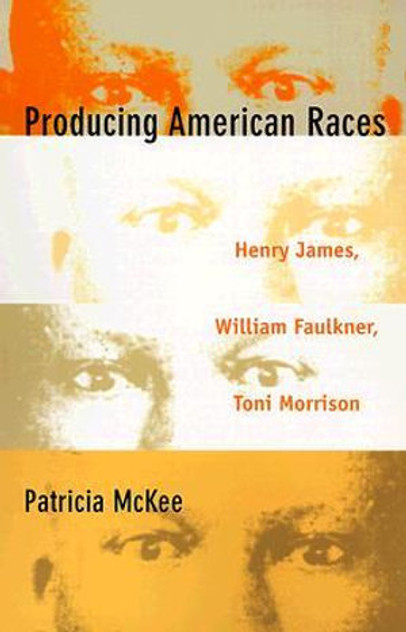
In Producing American Races Patricia McKee examines three authors who have powerfully influenced the formation of racial identities in the United States: Henry James, William Faulkner, and Toni...
These essays critically examine the issue of race in college and professional sports, beginning with the effects of stereotypes on black female college athletes, and the self-handicapping of black...